
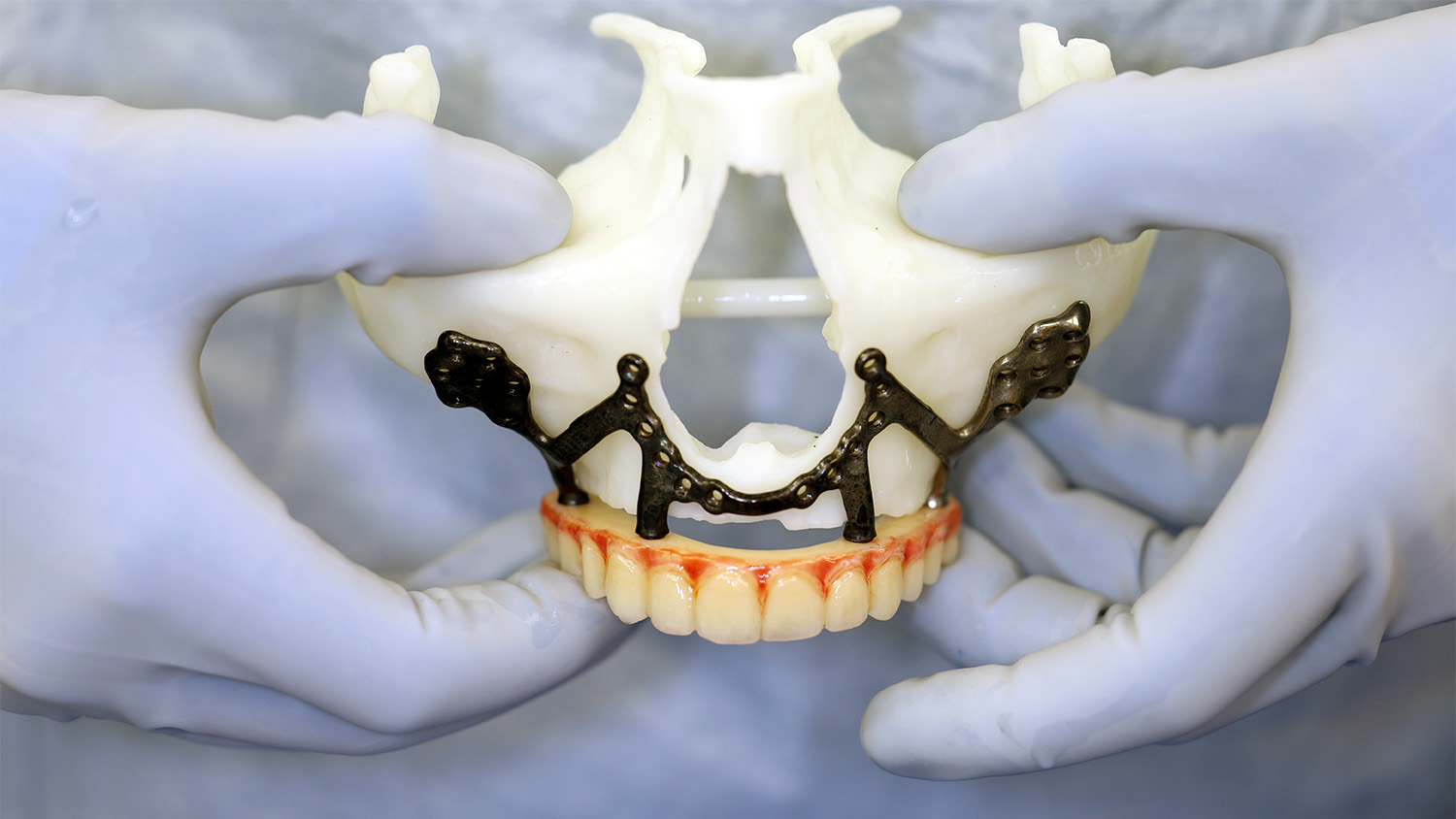
3-D Technology Advances Maxillofacial Reconstruction for Military Patients
Recent developments from the Uniformed Services University highlight significant advances in three-dimensional technology applied to maxillofacial reconstruction for military personnel.
The story
in brief.
What happened, who it affects, and why it landed on our intelligence desk — in plain English, sixty seconds or less.
Recent developments from the Uniformed Services University highlight significant advances in three-dimensional technology applied to maxillofacial reconstruction for military personnel. The report details how digital modelling and printing techniques are enhancing surgical precision and patient outcomes in complex trauma cases. This innovation underscores a growing intersection between advanced manufacturing and specialised medical care, offering improved recovery prospects for service members suffering from severe facial injuries. The findings suggest a broader shift towards personalised, technology-driven surgical interventions within defence healthcare systems, marking a pivotal evolution in reconstructive medicine protocols.
Indicative index of skill mentions in professional job postings for the field this story moves (2019 = 1)
What this means
for your career.
Every headline redistributes opportunity. Here is who this one rewards — and how to be on the right side of it.
This development signals a rising demand for professionals who bridge clinical expertise with advanced digital fabrication. If you work in healthcare, consider upskilling in medical imaging and 3D modelling to support surgical planning teams. Engineers and data scientists should focus on biomaterials and algorithmic precision, as these skills become critical in developing bespoke implants. For healthcare managers, understanding the operational integration of these technologies is essential for optimising patient pathways and resource allocation. You should actively monitor regulatory frameworks surrounding digital health devices. Smart professionals will now pursue cross-disciplinary training, combining clinical knowledge with technical proficiency in additive manufacturing, ensuring they remain indispensable in an increasingly digitised medical landscape.
For this story, the fields that convert it into pay are Healthcare Management, Engineering, Medical Billing And Coding and Healthcare Data Analytics — exactly the programmes matched below. The chart shows the indicative salary uplift certified professionals report in each of those fields; every one of them is a click away, from £79, finishing in as few as 20 days.
Indicative ranges from published continuing-education salary studies, by field — each field is a recommended course below
Enrol in these
to benefit.
These programmes position you for exactly this shift — online, self-paced, and finishing with a verifiable certificate you can share the day you pass.
 Best match
Certificate in Healthcare Management
 Recommended
Certificate in Engineering
 Recommended
Certificate in Medical Billing And Coding
 Recommended
Certificate in Healthcare Data Analytics
Launch pricing shown against standard certificate value. The fee you see today is the fee you lock in.
This briefing is based on reporting by Uniformed Services University on 15 Oct, 14:11. Read the original coverage →
Read the news. Then outrun it.
Every OnlineUni programme is online, self-paced and from £79 — so a headline today can be your credential this month.