
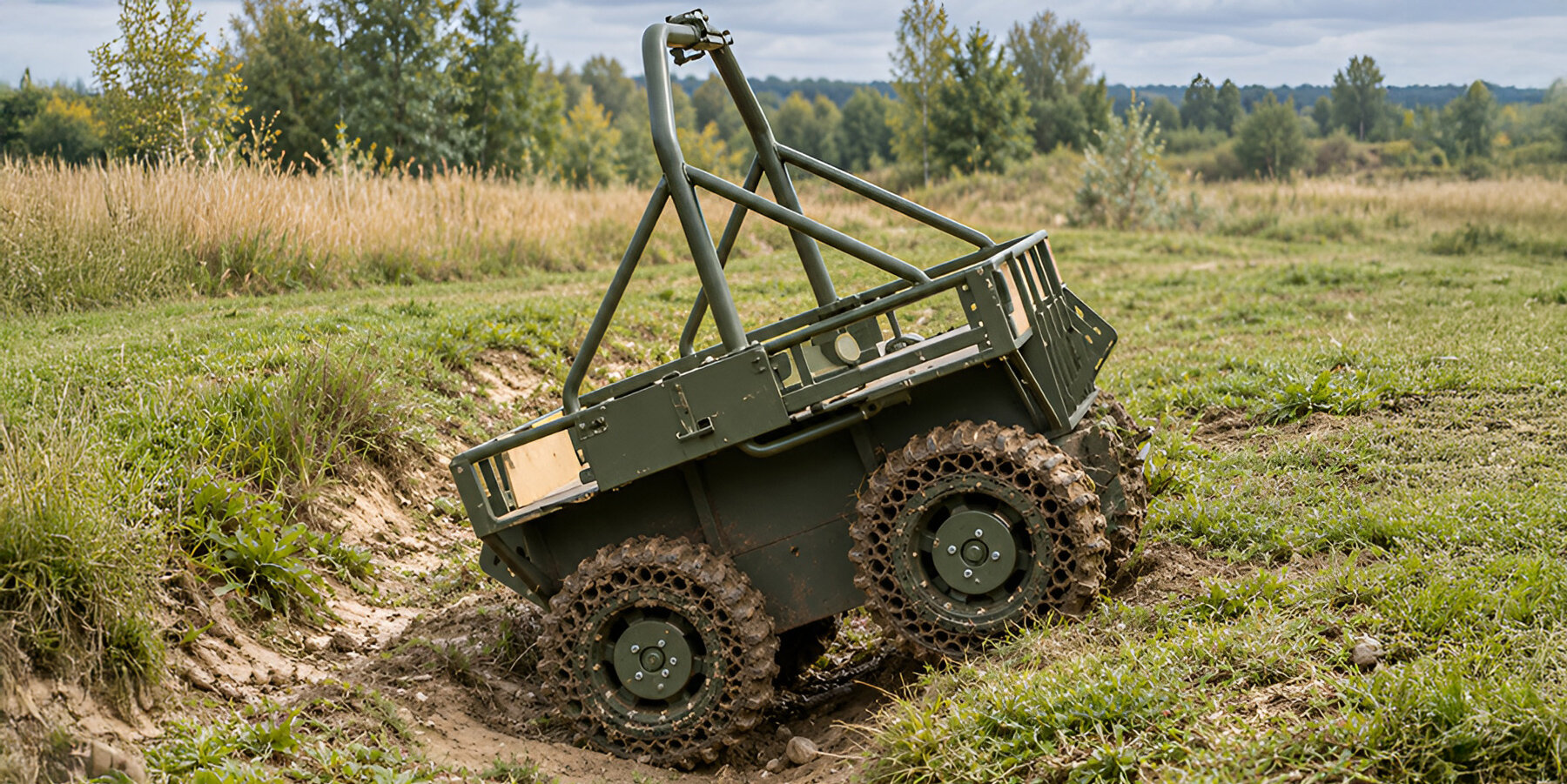
3D printed airless wheels help ground robots bring the wounded to safety
Recent developments highlight the integration of 3D-printed airless wheels into ground-based rescue robots, enhancing their capability to evacuate wounded individuals from hazardous environments.
The story
in brief.
What happened, who it affects, and why it landed on our intelligence desk — in plain English, sixty seconds or less.
Recent developments highlight the integration of 3D-printed airless wheels into ground-based rescue robots, enhancing their capability to evacuate wounded individuals from hazardous environments. This technological advancement addresses critical limitations in traditional mobility systems, offering superior durability and terrain adaptability for emergency response scenarios. The innovation underscores a growing intersection between additive manufacturing and autonomous robotics, promising more reliable equipment for disaster relief and military applications. Professionals in engineering and emergency services should note this shift towards resilient, self-sustaining robotic solutions that improve operational safety and efficiency in high-risk situations.
Indicative index of skill mentions in professional job postings for the field this story moves (2019 = 1)
What this means
for your career.
Every headline redistributes opportunity. Here is who this one rewards — and how to be on the right side of it.
You must recognise that additive manufacturing is no longer confined to prototyping; it is now critical for producing functional, high-performance components in emergency response systems. Professionals in mechanical engineering and robotics should prioritise skills in 3D printing technologies and autonomous navigation. If you work in disaster management or occupational health, understanding these technological shifts allows you to advocate for better equipment standards. A smart professional would immediately explore courses in Engineering and Innovation to grasp the practical applications of 3D printing in durable goods. Simultaneously, familiarise yourself with Crisis Management to understand how such technologies integrate into broader emergency protocols. By bridging technical design knowledge with operational safety strategies, you position yourself as a versatile asset capable of driving the adoption of next-generation rescue technologies within your organisation.
For this story, the fields that convert it into pay are Engineering, Innovation, Crisis Management and Occupational Health And Safety — exactly the programmes matched below. The chart shows the indicative salary uplift certified professionals report in each of those fields; every one of them is a click away, from £79, finishing in as few as 20 days.
Indicative ranges from published continuing-education salary studies, by field — each field is a recommended course below
Enrol in these
to benefit.
These programmes position you for exactly this shift — online, self-paced, and finishing with a verifiable certificate you can share the day you pass.
 Best match
Certificate in Engineering
 Recommended
Certificate in Innovation
 Recommended
Certificate in Crisis Management
Recommended
Certificate in Occupational Health And Safety
Launch pricing shown against standard certificate value. The fee you see today is the fee you lock in.
This briefing is based on reporting by Designboom on 11 Oct, 20:52. Read the original coverage →
Read the news. Then outrun it.
Every OnlineUni programme is online, self-paced and from £79 — so a headline today can be your credential this month.