
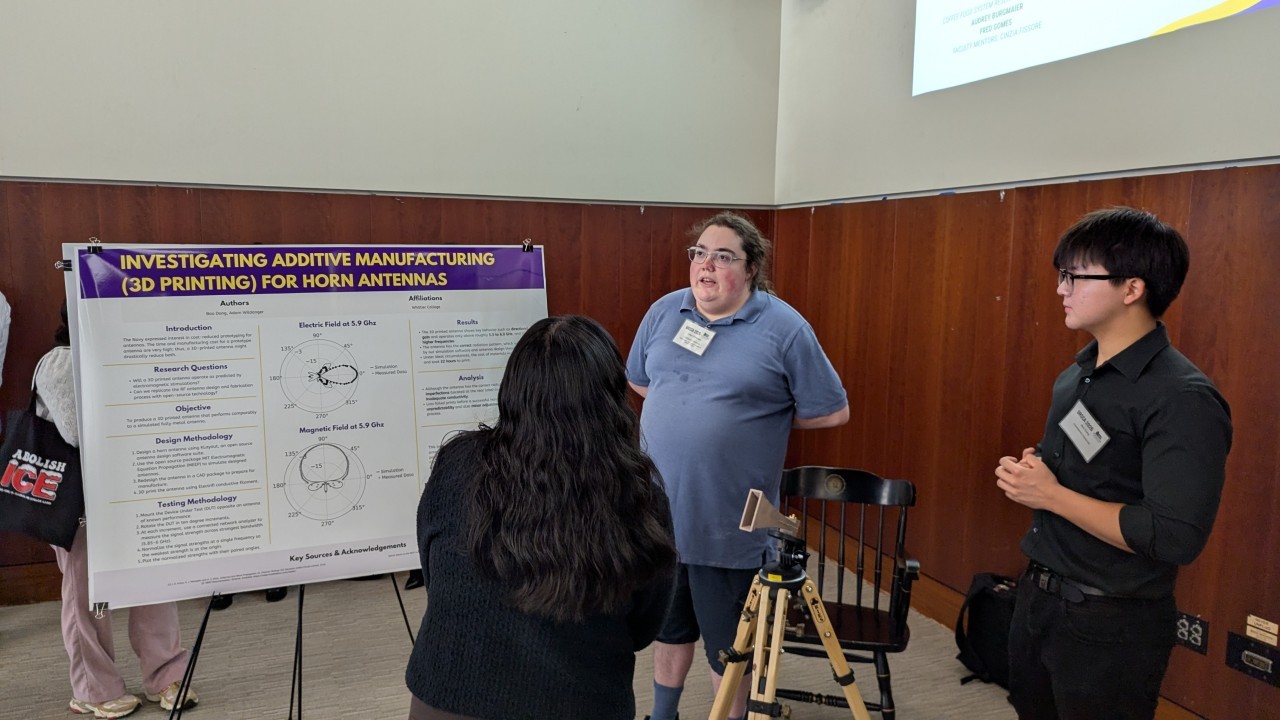
Advancing RF Technology through 3D Printing
Whittier College reports on the integration of additive manufacturing techniques with radio frequency engineering.
The story
in brief.
What happened, who it affects, and why it landed on our intelligence desk — in plain English, sixty seconds or less.
Whittier College reports on the integration of additive manufacturing techniques with radio frequency engineering. The research demonstrates how 3D printing enables the creation of complex, customised RF components that traditional methods cannot easily produce. This approach offers greater design flexibility and potentially reduced production costs for specialised wireless devices. The study highlights specific material properties and printing parameters required to maintain signal integrity. It presents a practical pathway for engineers to prototype and manufacture advanced antenna systems and waveguides more efficiently. This development signals a shift towards more agile production models in telecommunications hardware development, emphasising precision and material science.
Indicative index of skill mentions in professional job postings for the field this story moves (2019 = 1)
What this means
for your career.
Every headline redistributes opportunity. Here is who this one rewards — and how to be on the right side of it.
This development signals a convergence of materials science and wireless engineering. You must adapt if your career involves hardware design or telecommunications. Traditional manufacturing skills remain relevant, but expertise in additive manufacturing processes becomes increasingly valuable. Professionals in RF engineering should immediately explore how 3D printing affects signal propagation and component durability. You should upskill in both CAD design for additive manufacturing and RF simulation software. Engineers who understand the intersection of these fields will lead product innovation. Do not ignore this trend; instead, integrate additive manufacturing principles into your current workflow. Seek projects that allow you to prototype RF components using 3D printing. This proactive approach positions you as a forward-thinking expert capable of delivering cost-effective, high-performance solutions in a rapidly evolving technological landscape.
For this story, the fields that convert it into pay are Engineering, Innovation, Cloud Computing and Sustainable Computing — exactly the programmes matched below. The chart shows the indicative salary uplift certified professionals report in each of those fields; every one of them is a click away, from £79, finishing in as few as 20 days.
Indicative ranges from published continuing-education salary studies, by field — each field is a recommended course below
Enrol in these
to benefit.
These programmes position you for exactly this shift — online, self-paced, and finishing with a verifiable certificate you can share the day you pass.
 Best match
Certificate in Engineering
 Recommended
Certificate in Innovation
 Recommended
Certificate in Cloud Computing
Recommended
Certificate in Sustainable Computing
Launch pricing shown against standard certificate value. The fee you see today is the fee you lock in.
This briefing is based on reporting by Whittier College on 8 Sep, 21:16. Read the original coverage →
Read the news. Then outrun it.
Every OnlineUni programme is online, self-paced and from £79 — so a headline today can be your credential this month.