
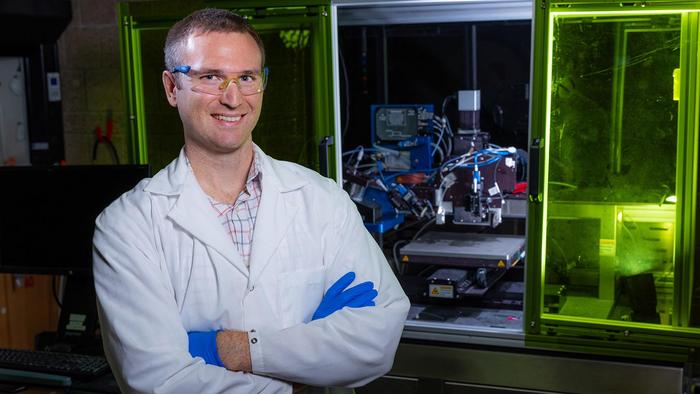
Advancing the technology to print electronics on 3D surfaces
Recent research highlights significant progress in printing electronics directly onto three-dimensional surfaces, moving beyond traditional flat substrates.
The story
in brief.
What happened, who it affects, and why it landed on our intelligence desk — in plain English, sixty seconds or less.
Recent research highlights significant progress in printing electronics directly onto three-dimensional surfaces, moving beyond traditional flat substrates. This advancement enables the integration of functional electronic components into complex geometries, facilitating the development of smart textiles, wearable health monitors, and interactive industrial equipment. The technology addresses longstanding limitations in manufacturing flexibility, allowing for more efficient production of customised electronic devices. For professionals, this signals a shift towards additive manufacturing techniques that merge material science with electronic engineering, opening new avenues for product innovation and bespoke electronic solutions across various industries.
Indicative index of skill mentions in professional job postings for the field this story moves (2019 = 1)
What this means
for your career.
Every headline redistributes opportunity. Here is who this one rewards — and how to be on the right side of it.
This development elevates the value of skills bridging materials science, electronics, and additive manufacturing. You should pay attention if you work in product design, hardware engineering, or industrial manufacturing. Professionals who understand both circuit design and 3D printing mechanics will find themselves highly sought after. A smart next step is to deepen your expertise in printed electronics or flexible circuits. Consider upskilling in engineering principles that govern non-planar device fabrication. If you are in project management, learn how these new manufacturing constraints affect timelines and supply chains. Embrace interdisciplinary learning to stay ahead of this hardware innovation wave.
For this story, the fields that convert it into pay are Engineering, Innovation, Requirements Engineering and Supply Chain — exactly the programmes matched below. The chart shows the indicative salary uplift certified professionals report in each of those fields; every one of them is a click away, from £79, finishing in as few as 20 days.
Indicative ranges from published continuing-education salary studies, by field — each field is a recommended course below
Enrol in these
to benefit.
These programmes position you for exactly this shift — online, self-paced, and finishing with a verifiable certificate you can share the day you pass.
 Best match
Certificate in Engineering
 Recommended
Certificate in Innovation
 Recommended
Certificate in Requirements Engineering
 Recommended
Certificate in Supply Chain
Launch pricing shown against standard certificate value. The fee you see today is the fee you lock in.
This briefing is based on reporting by EurekAlert! on 16 Sep, 13:34. Read the original coverage →
Read the news. Then outrun it.
Every OnlineUni programme is online, self-paced and from £79 — so a headline today can be your credential this month.