
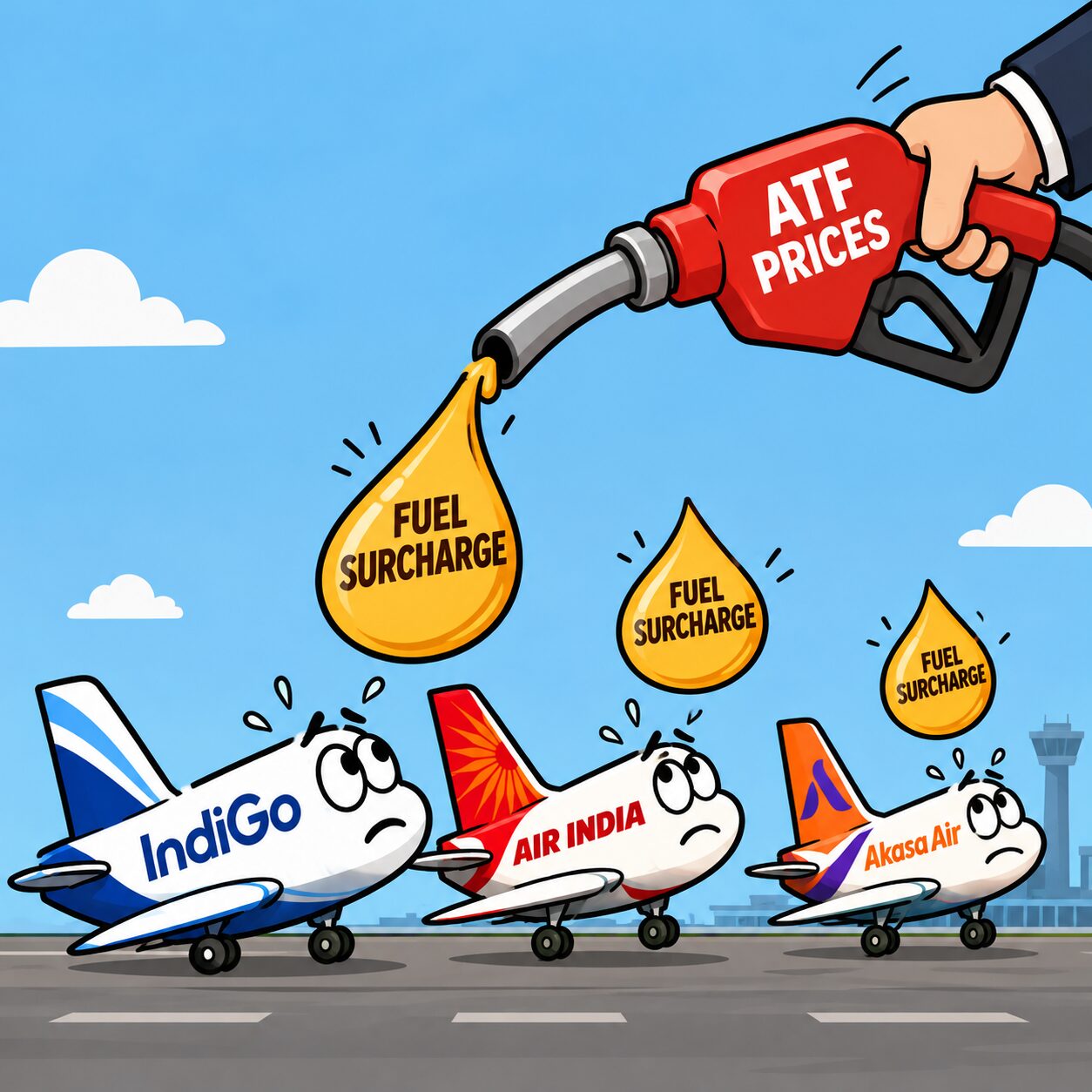
Akasa Air, Air India Group raise fuel surcharges as Indian airlines pass on higher ATF costs
Major Indian carriers, including Akasa Air and the Air India Group, have implemented increased fuel surcharges to offset rising aviation turbine fuel costs.
The story
in brief.
What happened, who it affects, and why it landed on our intelligence desk — in plain English, sixty seconds or less.
Major Indian carriers, including Akasa Air and the Air India Group, have implemented increased fuel surcharges to offset rising aviation turbine fuel costs. This strategic adjustment reflects broader industry efforts to mitigate financial pressures caused by volatile global energy markets. For professionals, this signals a direct correlation between macroeconomic factors and operational pricing strategies within the aviation sector. The move highlights the critical importance of cost management and revenue optimisation in an industry heavily dependent on fuel efficiency. Stakeholders should monitor how these pricing changes influence consumer behaviour and long-term profitability across the aviation landscape.
Indicative index of skill mentions in professional job postings for the field this story moves (2019 = 1)
What this means
for your career.
Every headline redistributes opportunity. Here is who this one rewards — and how to be on the right side of it.
You must adapt to a landscape where cost volatility directly dictates corporate strategy. Professionals in finance and operations should prioritise skills in financial modelling and risk assessment to navigate these pricing shifts. If you work in customer experience, anticipate increased sensitivity to price changes; developing empathy and clear communication skills will help manage passenger expectations. Supply chain experts should focus on optimising logistics to reduce fuel dependency. A smart professional would immediately review their understanding of revenue management systems and dynamic pricing algorithms. Upskill in data analytics to forecast cost impacts accurately. This environment rewards those who can balance fiscal discipline with service quality, making strategic financial acumen more valuable than ever for career progression.
For this story, the fields that convert it into pay are Financial Modeling, Risk Management Strategies, Supply Chain and AI in Aviation — exactly the programmes matched below. The chart shows the indicative salary uplift certified professionals report in each of those fields; every one of them is a click away, from £79, finishing in as few as 20 days.
Indicative ranges from published continuing-education salary studies, by field — each field is a recommended course below
Enrol in these
to benefit.
These programmes position you for exactly this shift — online, self-paced, and finishing with a verifiable certificate you can share the day you pass.
 Best match
Certificate in Financial Modeling
 Recommended
Certificate in Risk Management Strategies
Recommended
Certificate in Supply Chain
 Recommended
Certificate in AI in Aviation
Launch pricing shown against standard certificate value. The fee you see today is the fee you lock in.
This briefing is based on reporting by Live From A Lounge on 8 Oct, 14:28. Read the original coverage →
Read the news. Then outrun it.
Every OnlineUni programme is online, self-paced and from £79 — so a headline today can be your credential this month.