
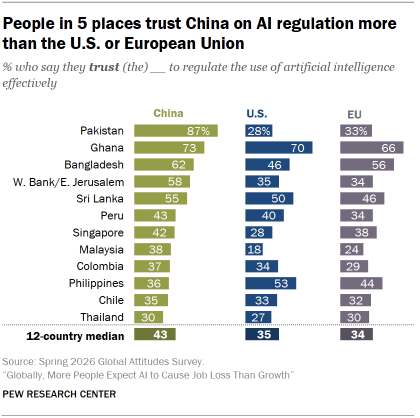
Do people trust China, the U.S. or the EU to regulate AI?
A recent Pew Research Centre study examines global public confidence in artificial intelligence regulation across three major geopolitical blocs: China, the United States, and the European Union.
The story
in brief.
What happened, who it affects, and why it landed on our intelligence desk — in plain English, sixty seconds or less.
A recent Pew Research Centre study examines global public confidence in artificial intelligence regulation across three major geopolitical blocs: China, the United States, and the European Union. The findings highlight significant variations in trust levels, reflecting differing regulatory approaches and cultural attitudes towards technological governance. For professionals, this data underscores the fragmented nature of the global AI landscape, where compliance requirements and ethical expectations vary drastically by region. Understanding these divergent perspectives is crucial for navigating international markets, ensuring regulatory adherence, and anticipating how public sentiment may influence future policy frameworks and corporate strategies in the rapidly evolving AI sector.
Indicative index of skill mentions in professional job postings for the field this story moves (2019 = 1)
What this means
for your career.
Every headline redistributes opportunity. Here is who this one rewards — and how to be on the right side of it.
You must adapt your strategy to navigate this fragmented regulatory landscape. Trust deficits in specific regions mean that technical expertise alone is insufficient; you need robust knowledge of compliance and governance frameworks. Professionals in legal, risk management, and policy roles will see increased demand as organisations seek to mitigate reputational and operational risks. You should prioritise upskilling in AI ethics and international regulatory standards. A smart next step is to integrate compliance considerations into your current projects, demonstrating to employers that you can align AI initiatives with diverse global expectations. This proactive approach positions you as a strategic asset capable of bridging the gap between technological innovation and responsible governance, ensuring your career remains resilient amidst shifting political and public sentiments.
For this story, the fields that convert it into pay are AI Strategy, Compliance And Governance, Risk Management Strategies and Law — exactly the programmes matched below. The chart shows the indicative salary uplift certified professionals report in each of those fields; every one of them is a click away, from £79, finishing in as few as 20 days.
Indicative ranges from published continuing-education salary studies, by field — each field is a recommended course below
Enrol in these
to benefit.
These programmes position you for exactly this shift — online, self-paced, and finishing with a verifiable certificate you can share the day you pass.
 Best match
Certificate in AI Strategy
 Recommended
Certificate in Compliance And Governance
 Recommended
Certificate in Risk Management Strategies
 Recommended
Certificate in Law
Launch pricing shown against standard certificate value. The fee you see today is the fee you lock in.
This briefing is based on reporting by Pew Research Center on 17 Sep, 13:59. Read the original coverage →
Read the news. Then outrun it.
Every OnlineUni programme is online, self-paced and from £79 — so a headline today can be your credential this month.