

Ford CEO sees blue-collar workers using AI as a ‘companion’—but other jobs ‘are definitely going to be changed and eliminated’
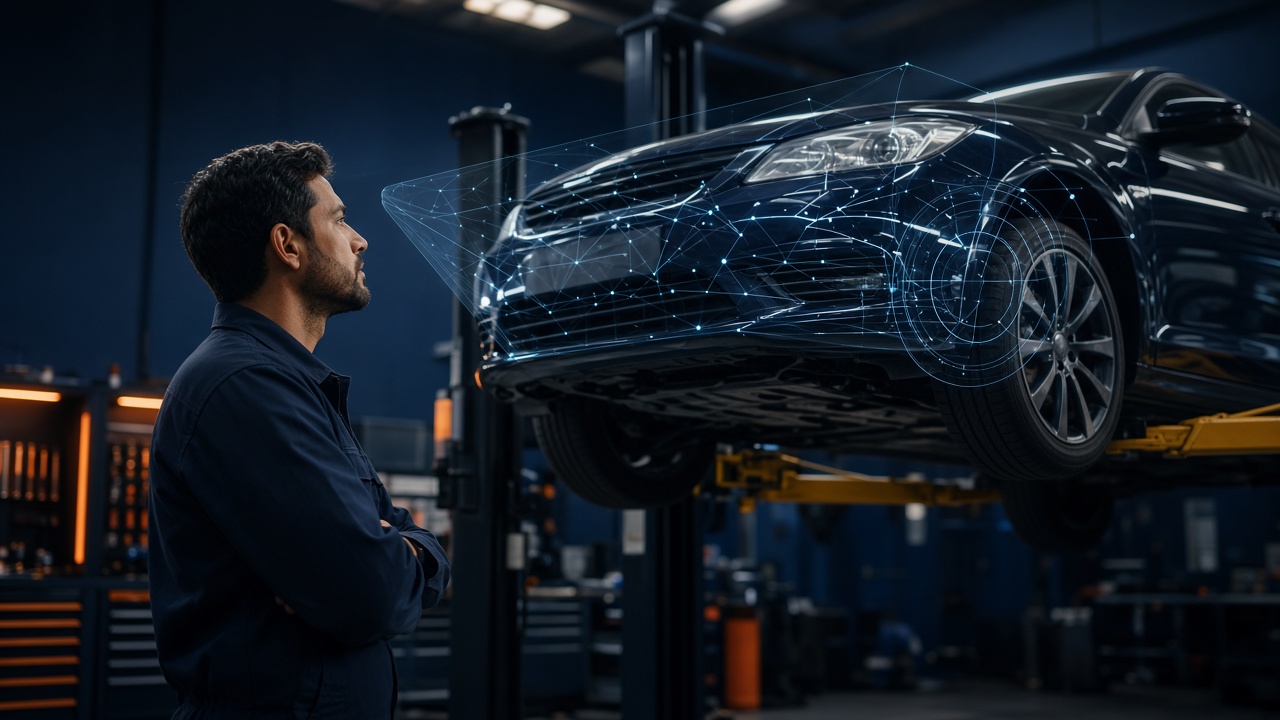
Ford’s chief executive recently stated that artificial intelligence will serve as a collaborative companion for blue-collar employees, enhancing their productivity rather than replacing them entirely.
The story
in brief.
What happened, who it affects, and why it landed on our intelligence desk — in plain English, sixty seconds or less.
Ford’s chief executive recently stated that artificial intelligence will serve as a collaborative companion for blue-collar employees, enhancing their productivity rather than replacing them entirely. However, he acknowledged that other roles within the automotive sector will undoubtedly face significant transformation or elimination. This nuanced perspective highlights a dual trajectory in industrial automation, where certain manual tasks are augmented by technology while others become obsolete. The commentary underscores the evolving nature of work, suggesting that while AI adoption offers opportunities for skill enhancement, it simultaneously necessitates a strategic approach to career resilience and workforce planning amidst inevitable structural shifts in the manufacturing landscape.
Indicative index of skill mentions in professional job postings for the field this story moves (2019 = 1)
What this means
for your career.
Every headline redistributes opportunity. Here is who this one rewards — and how to be on the right side of it.
You must adapt to a landscape where AI augments manual labour while displacing routine roles. Technical skills in machine operation and basic coding rise in value, alongside soft skills like adaptability and critical thinking. If you work in manufacturing or logistics, pay close attention to how your company integrates these tools. A smart professional would immediately upskill in human-machine collaboration and data literacy. Do not resist automation; instead, learn to leverage it as a productivity companion. Focus on tasks requiring complex physical dexterity or nuanced problem-solving that AI cannot yet replicate. Proactively seek training in AI applications relevant to your sector, ensuring you remain indispensable. Your career longevity now depends on your ability to integrate technology seamlessly into your daily workflow rather than viewing it as a distant threat.
For this story, the fields that convert it into pay are AI in Automotive, Artificial Intelligence, Engineering and Innovation — exactly the programmes matched below. The chart shows the indicative salary uplift certified professionals report in each of those fields; every one of them is a click away, from £79, finishing in as few as 20 days.
Indicative ranges from published continuing-education salary studies, by field — each field is a recommended course below
Enrol in these
to benefit.
These programmes position you for exactly this shift — online, self-paced, and finishing with a verifiable certificate you can share the day you pass.
 Best match
Certificate in AI in Automotive
 Recommended
Certificate in Artificial Intelligence
 Recommended
Certificate in Engineering
 Recommended
Certificate in Innovation
Launch pricing shown against standard certificate value. The fee you see today is the fee you lock in.
This briefing is based on reporting by Fortune on 30 Sep, 22:28. Read the original coverage →
Read the news. Then outrun it.
Every OnlineUni programme is online, self-paced and from £79 — so a headline today can be your credential this month.