
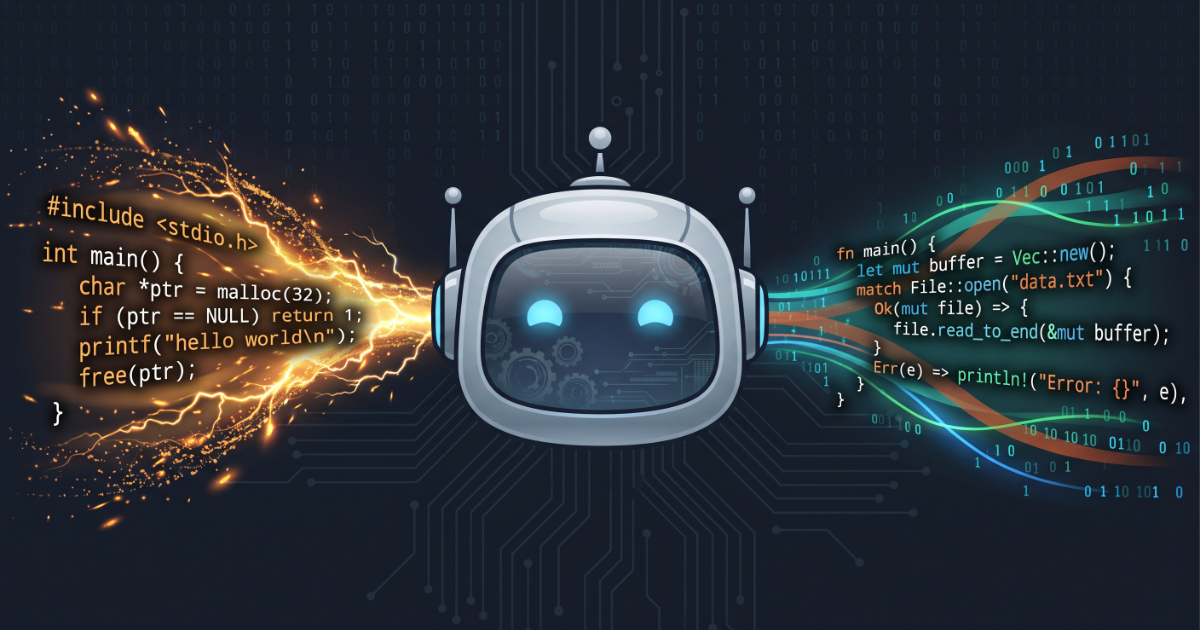
Google Rewrites Critical C Dependencies to Rust Using AI and Differential Fuzzing
Google has successfully migrated critical C language dependencies to Rust, leveraging artificial intelligence and differential fuzzing to ensure reliability.
The story
in brief.
What happened, who it affects, and why it landed on our intelligence desk — in plain English, sixty seconds or less.
Google has successfully migrated critical C language dependencies to Rust, leveraging artificial intelligence and differential fuzzing to ensure reliability. This initiative highlights a strategic shift towards memory-safe programming languages within major tech infrastructure. By utilising AI-assisted tools, the company aims to reduce security vulnerabilities inherent in legacy C codebases. The process involved rigorous testing to maintain performance while enhancing system stability. This move signals a broader industry trend where large technology firms prioritise secure, maintainable code over traditional, error-prone languages. Professionals should note the integration of advanced testing methodologies with modern language adoption as a key development in software engineering practices.
Indicative index of skill mentions in professional job postings for the field this story moves (2019 = 1)
What this means
for your career.
Every headline redistributes opportunity. Here is who this one rewards — and how to be on the right side of it.
You must adapt to the rising demand for memory-safe languages. Rust proficiency is becoming essential for backend and systems roles, while AI-assisted development skills offer a significant competitive edge. If you work with C or C++, prioritise upskilling in Rust to future-proof your career. Engineers should also master differential fuzzing and automated testing frameworks, as these are now critical for validating complex migrations. Do not ignore the intersection of AI and software engineering; understanding how to leverage AI for code generation and review is no longer optional. Start building small projects in Rust today and integrate AI tools into your workflow. This strategic pivot will position you as a valuable asset in an industry increasingly focused on security and efficiency.
For this story, the fields that convert it into pay are Cyber Security, Artificial Intelligence, Cloud Computing and Engineering — exactly the programmes matched below. The chart shows the indicative salary uplift certified professionals report in each of those fields; every one of them is a click away, from £79, finishing in as few as 20 days.
Indicative ranges from published continuing-education salary studies, by field — each field is a recommended course below
Enrol in these
to benefit.
These programmes position you for exactly this shift — online, self-paced, and finishing with a verifiable certificate you can share the day you pass.
 Best match
Certificate in Cyber Security
 Recommended
Certificate in Artificial Intelligence
 Recommended
Certificate in Cloud Computing
 Recommended
Certificate in Engineering
Launch pricing shown against standard certificate value. The fee you see today is the fee you lock in.
This briefing is based on reporting by infoq.com on 27 Sep, 14:14. Read the original coverage →
Read the news. Then outrun it.
Every OnlineUni programme is online, self-paced and from £79 — so a headline today can be your credential this month.