
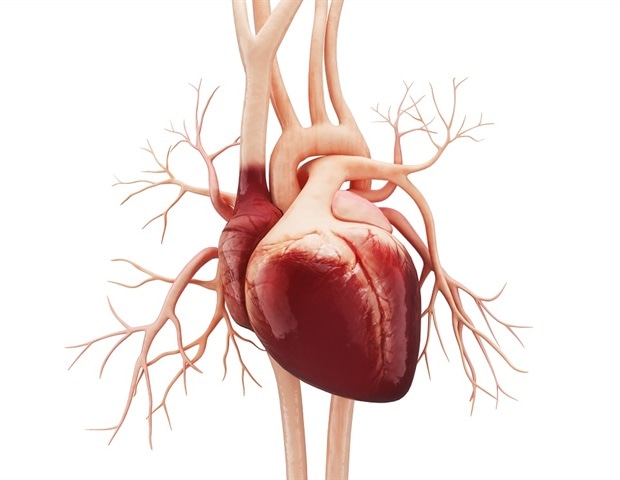
Groundbreaking technology uses quantum sensors to measure heart activity
Recent reports highlight a significant advancement in medical diagnostics, where quantum sensors are now employed to measure heart activity with unprecedented precision.
The story
in brief.
What happened, who it affects, and why it landed on our intelligence desk — in plain English, sixty seconds or less.
Recent reports highlight a significant advancement in medical diagnostics, where quantum sensors are now employed to measure heart activity with unprecedented precision. This technology leverages the extreme sensitivity of quantum systems to detect minute physiological changes, offering superior accuracy compared to traditional electrocardiogram methods. The development promises to enhance early detection of cardiac anomalies, potentially transforming routine health screenings. For professionals, this signals a convergence of advanced physics and clinical practice, suggesting that future healthcare delivery will increasingly rely on sophisticated hardware capable of capturing high-fidelity biological data for improved patient outcomes and diagnostic reliability.
Indicative index of skill mentions in professional job postings for the field this story moves (2019 = 1)
What this means
for your career.
Every headline redistributes opportunity. Here is who this one rewards — and how to be on the right side of it.
You should recognise that this breakthrough blurs the lines between quantum physics and clinical medicine, creating demand for interdisciplinary expertise. Professionals in healthcare management must understand how to integrate such high-tech diagnostics into existing workflows efficiently. Engineers and data scientists will find their skills increasingly valuable as they develop the algorithms required to interpret complex quantum data streams. If you work in healthcare, start exploring the technical foundations of medical device innovation. For those in tech, specialising in sensor technology or quantum computing applications offers a distinct competitive advantage. You must proactively bridge the gap between scientific research and practical application. Consider upskilling in data analytics or engineering principles to remain relevant as healthcare becomes more technologically driven and data-intensive.
For this story, the fields that convert it into pay are Healthcare, Engineering, Data Science and Healthcare Management — exactly the programmes matched below. The chart shows the indicative salary uplift certified professionals report in each of those fields; every one of them is a click away, from £79, finishing in as few as 20 days.
Indicative ranges from published continuing-education salary studies, by field — each field is a recommended course below
Enrol in these
to benefit.
These programmes position you for exactly this shift — online, self-paced, and finishing with a verifiable certificate you can share the day you pass.
 Best match
Certificate in Healthcare
 Recommended
Certificate in Engineering
 Recommended
Certificate in Data Science
 Recommended
Certificate in Healthcare Management
Launch pricing shown against standard certificate value. The fee you see today is the fee you lock in.
This briefing is based on reporting by News-Medical on 17 Sep, 14:59. Read the original coverage →
Read the news. Then outrun it.
Every OnlineUni programme is online, self-paced and from £79 — so a headline today can be your credential this month.