
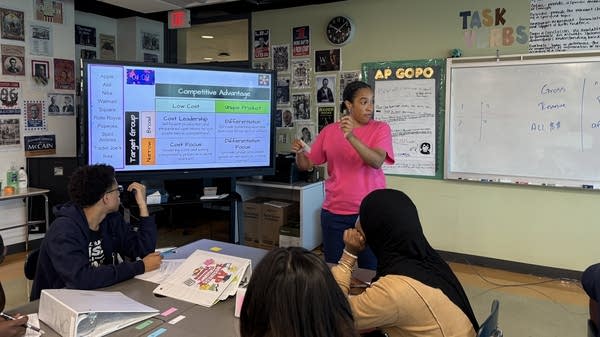
High schoolers take new AP business with personal finance class
The College Board has introduced a new Advanced Placement course in personal finance, marking a significant shift in secondary education curricula.
The story
in brief.
What happened, who it affects, and why it landed on our intelligence desk — in plain English, sixty seconds or less.
The College Board has introduced a new Advanced Placement course in personal finance, marking a significant shift in secondary education curricula. This development aims to equip high school students with practical financial literacy skills before they enter higher education or the workforce. The course covers essential topics such as budgeting, investing, and understanding credit, addressing widespread concerns about youth financial preparedness. By integrating these concepts into standard academic pathways, the initiative seeks to bridge the gap between theoretical knowledge and real-world financial management, ensuring graduates are better positioned to handle personal economic responsibilities immediately upon leaving school.
Indicative index of skill mentions in professional job postings for the field this story moves (2019 = 1)
What this means
for your career.
Every headline redistributes opportunity. Here is who this one rewards — and how to be on the right side of it.
This curriculum shift signals a broader societal expectation that financial literacy is a baseline professional competency. As the workforce evolves, employers increasingly value candidates who demonstrate fiscal responsibility and strategic thinking regarding resources. You should view this not merely as an educational trend, but as a precursor to higher demands for financial acumen in entry-level roles. Professionals in finance, human resources, and education must adapt their strategies accordingly. Smart professionals will deepen their expertise in financial modelling and regulatory compliance to guide this new generation. Consider upskilling in areas that translate complex financial data into actionable insights, positioning yourself as a mentor or strategist who can bridge the gap between academic theory and practical application in corporate environments.
For this story, the fields that convert it into pay are Finance and Accounting, Financial Modeling, Business And Management and Education — exactly the programmes matched below. The chart shows the indicative salary uplift certified professionals report in each of those fields; every one of them is a click away, from £79, finishing in as few as 20 days.
Indicative ranges from published continuing-education salary studies, by field — each field is a recommended course below
Enrol in these
to benefit.
These programmes position you for exactly this shift — online, self-paced, and finishing with a verifiable certificate you can share the day you pass.
 Best match
Certificate in Finance and Accounting
 Recommended
Certificate in Financial Modeling
Recommended
Certificate in Business And Management
Recommended
Certificate in Education
Launch pricing shown against standard certificate value. The fee you see today is the fee you lock in.
This briefing is based on reporting by marketplace.org on 17 Sep, 22:19. Read the original coverage →
Read the news. Then outrun it.
Every OnlineUni programme is online, self-paced and from £79 — so a headline today can be your credential this month.