
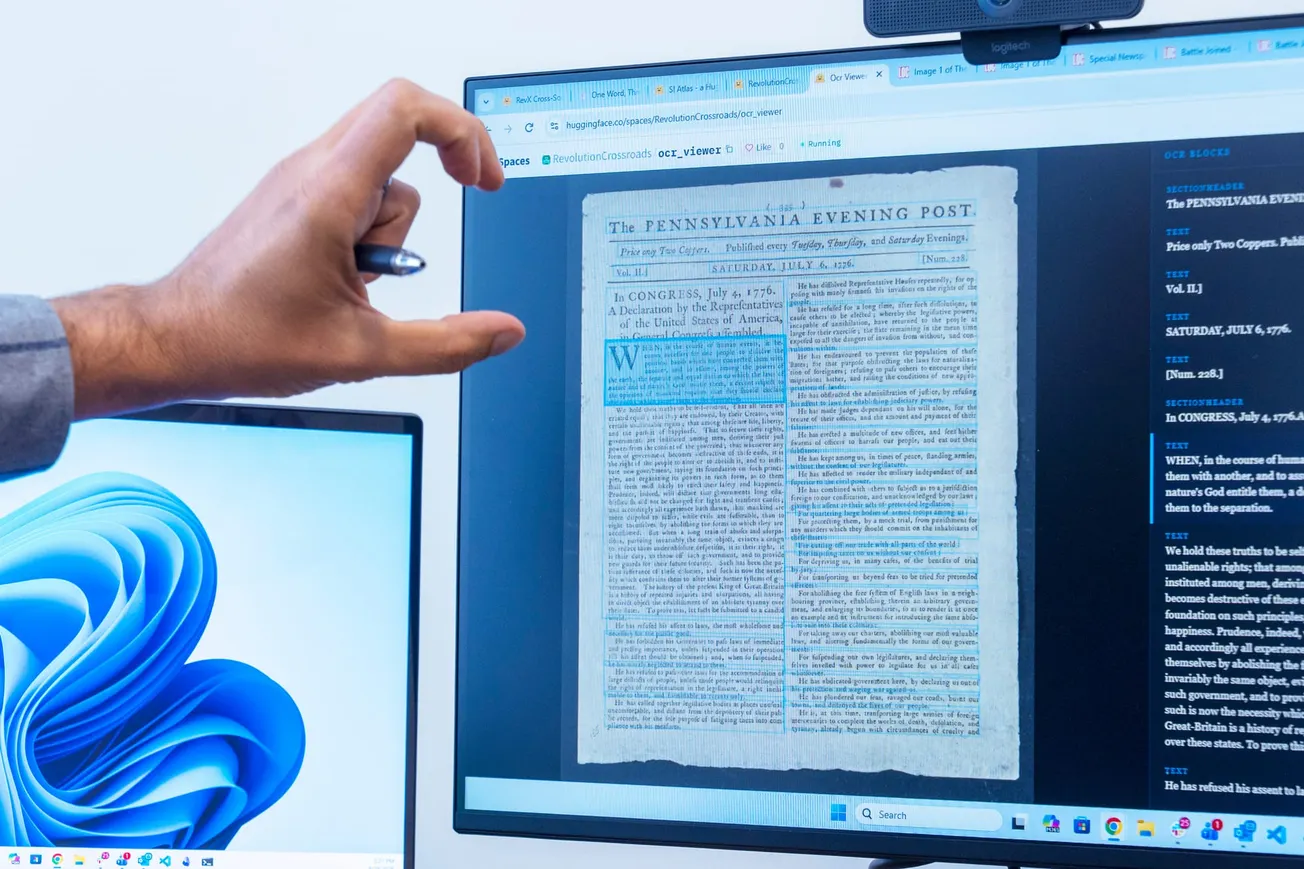
How the Smithsonian is using AI to connect artifacts from the American Revolution
The Smithsonian Institution is deploying artificial intelligence to analyse and link disparate artifacts related to the American Revolution.
The story
in brief.
What happened, who it affects, and why it landed on our intelligence desk — in plain English, sixty seconds or less.
The Smithsonian Institution is deploying artificial intelligence to analyse and link disparate artifacts related to the American Revolution. This initiative aims to uncover hidden connections between historical objects, thereby enriching the narrative context for visitors and researchers. By leveraging machine learning algorithms, the museum seeks to automate the identification of thematic and chronological relationships within its vast collections. This approach demonstrates how cultural heritage organisations are increasingly adopting advanced computational tools to enhance accessibility and deepen public engagement with historical material. The project highlights a growing trend of integrating digital innovation with traditional archival practices to preserve and interpret history more effectively for modern audiences.
Indicative index of skill mentions in professional job postings for the field this story moves (2019 = 1)
What this means
for your career.
Every headline redistributes opportunity. Here is who this one rewards — and how to be on the right side of it.
This development signals that AI literacy is no longer optional for professionals in cultural heritage, education, or data management. You must understand how machine learning can structure unstructured data to reveal meaningful patterns. Skills in data curation, metadata standards, and AI strategy will rise in value as institutions seek to digitise their archives. If you work in museums, libraries, or historical research, pay close attention to how technology reshapes storytelling and accessibility. A smart professional would upskill in data science fundamentals and AI strategy immediately. Learn to bridge the gap between technical AI capabilities and human-centric narratives. Start by exploring how AI tools can assist in cataloguing or analysing large datasets. Position yourself as a translator who can interpret algorithmic insights for broader audiences, ensuring that technological advancement serves educational and cultural goals effectively.
For this story, the fields that convert it into pay are Artificial Intelligence, Data Science, AI Strategy and Education — exactly the programmes matched below. The chart shows the indicative salary uplift certified professionals report in each of those fields; every one of them is a click away, from £79, finishing in as few as 20 days.
Indicative ranges from published continuing-education salary studies, by field — each field is a recommended course below
Enrol in these
to benefit.
These programmes position you for exactly this shift — online, self-paced, and finishing with a verifiable certificate you can share the day you pass.
 Best match
Certificate in Artificial Intelligence
 Recommended
Certificate in Data Science
 Recommended
Certificate in AI Strategy
 Recommended
Certificate in Education
Launch pricing shown against standard certificate value. The fee you see today is the fee you lock in.
This briefing is based on reporting by The Alexandria Brief on 3 Oct, 10:08. Read the original coverage →
Read the news. Then outrun it.
Every OnlineUni programme is online, self-paced and from £79 — so a headline today can be your credential this month.