
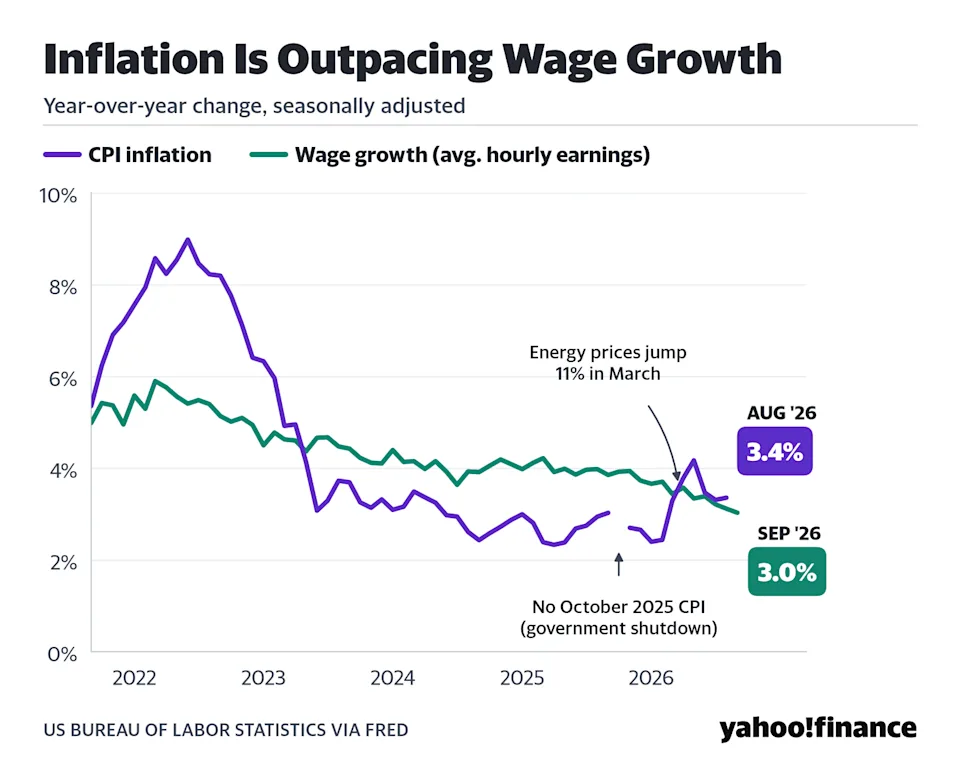
Inflation has been eating up wage gains for months. September was no better.
Recent economic data indicates that September continued a prolonged trend where inflation rates outpaced nominal wage increases for employees.
The story
in brief.
What happened, who it affects, and why it landed on our intelligence desk — in plain English, sixty seconds or less.
Recent economic data indicates that September continued a prolonged trend where inflation rates outpaced nominal wage increases for employees. This persistent gap erodes real purchasing power, meaning that despite potential salary adjustments, workers effectively experience a decline in their standard of living. The report highlights that this is not an isolated incident but part of a sustained period where cost-of-living pressures remain high. Consequently, the financial benefit of employment gains is being systematically neutralised by rising prices for essential goods and services, creating a challenging environment for household budgeting and long-term financial planning.
Indicative index of skill mentions in professional job postings for the field this story moves (2019 = 1)
What this means
for your career.
Every headline redistributes opportunity. Here is who this one rewards — and how to be on the right side of it.
You must treat your career capital as your primary hedge against inflation. Static roles with fixed compensation structures are increasingly risky. Instead, prioritise acquiring skills that directly influence revenue generation or cost reduction, making you indispensable during economic uncertainty. Focus on data-driven decision-making and financial acumen to demonstrate tangible value. You should actively negotiate based on market rates rather than internal bands, ensuring your pay reflects current economic realities. Upskill in areas like data science or strategic finance to command premium salaries. Additionally, diversify your income streams and enhance your personal financial literacy. Proactively seek roles in sectors resilient to inflation or those leading efficiency drives, positioning yourself where performance is visibly rewarded despite broader economic headwinds.
For this story, the fields that convert it into pay are Data Science, Finance and Accounting, Business And Management and Risk Management Strategies — exactly the programmes matched below. The chart shows the indicative salary uplift certified professionals report in each of those fields; every one of them is a click away, from £79, finishing in as few as 20 days.
Indicative ranges from published continuing-education salary studies, by field — each field is a recommended course below
Enrol in these
to benefit.
These programmes position you for exactly this shift — online, self-paced, and finishing with a verifiable certificate you can share the day you pass.
 Best match
Certificate in Data Science
Recommended
Certificate in Finance and Accounting
 Recommended
Certificate in Business And Management
 Recommended
Certificate in Risk Management Strategies
Launch pricing shown against standard certificate value. The fee you see today is the fee you lock in.
This briefing is based on reporting by Yahoo Finance on 3 Oct, 13:33. Read the original coverage →
Read the news. Then outrun it.
Every OnlineUni programme is online, self-paced and from £79 — so a headline today can be your credential this month.