
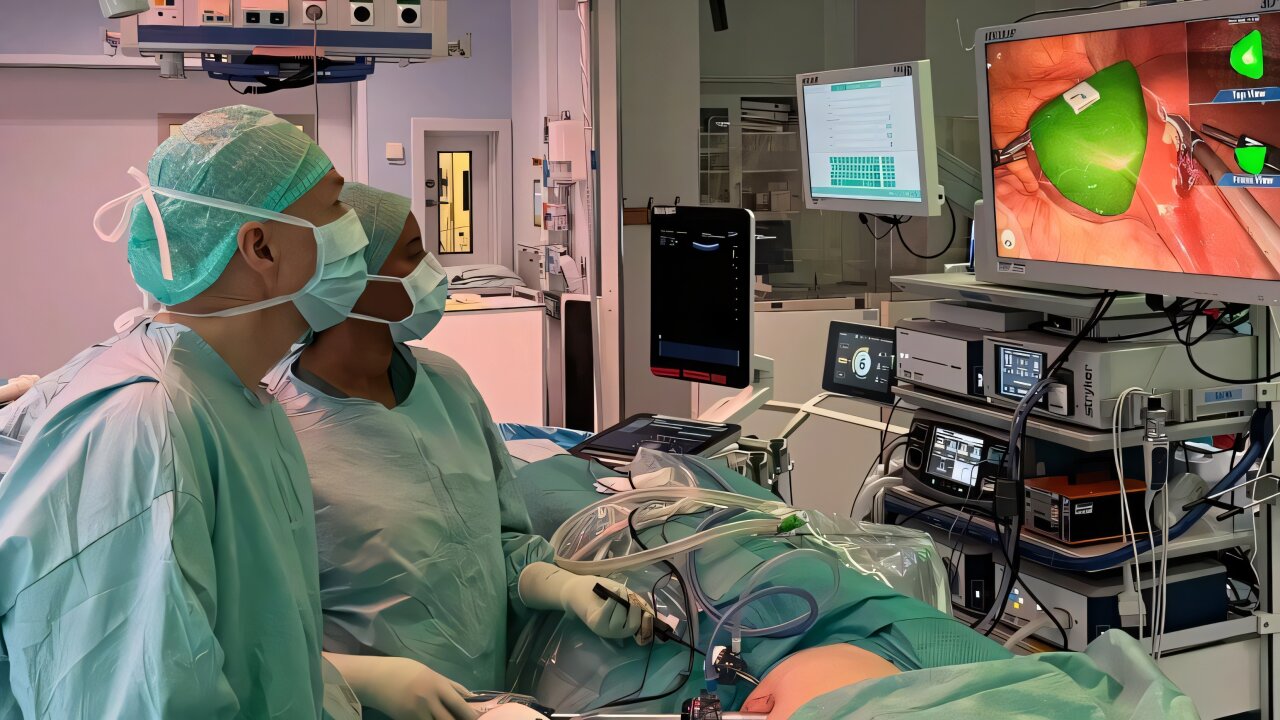
Interactive 3D technology reveals hidden tumors during surgery
Recent reports highlight the integration of interactive 3D technology into surgical procedures, enabling clinicians to visualise and identify hidden tumours with greater precision.
The story
in brief.
What happened, who it affects, and why it landed on our intelligence desk — in plain English, sixty seconds or less.
Recent reports highlight the integration of interactive 3D technology into surgical procedures, enabling clinicians to visualise and identify hidden tumours with greater precision. This advancement allows for real-time, immersive mapping of anatomical structures during operations, potentially improving patient outcomes by reducing the risk of incomplete tumour removal. The technology represents a significant shift towards augmented reality applications in clinical settings, offering surgeons enhanced spatial awareness. For healthcare professionals, this signals a growing reliance on sophisticated digital tools to augment traditional surgical skills, necessitating familiarity with emerging visualisation platforms and their practical implementation in operating theatres.
Indicative index of skill mentions in professional job postings for the field this story moves (2019 = 1)
What this means
for your career.
Every headline redistributes opportunity. Here is who this one rewards — and how to be on the right side of it.
This development signals a critical shift towards tech-augmented clinical practice. You must recognise that technical proficiency now extends beyond manual dexterity to include digital literacy. Surgeons and operating theatre staff should prioritise training in augmented reality interfaces and medical imaging interpretation. Healthcare managers need to evaluate infrastructure readiness for these systems, focusing on integration costs and workflow efficiency. If you work in med-tech, understanding the clinical validation process for such devices becomes essential. Smart professionals will immediately explore certifications in medical technology adoption and data visualisation. Do not ignore the regulatory implications; familiarise yourself with compliance standards for digital health tools. By upskilling in these areas, you position yourself as an indispensable bridge between clinical needs and technological innovation, ensuring you remain relevant in an increasingly digitised healthcare landscape.
For this story, the fields that convert it into pay are Healthcare Management, Healthcare Data Analytics, Engineering and Artificial Intelligence — exactly the programmes matched below. The chart shows the indicative salary uplift certified professionals report in each of those fields; every one of them is a click away, from £79, finishing in as few as 20 days.
Indicative ranges from published continuing-education salary studies, by field — each field is a recommended course below
Enrol in these
to benefit.
These programmes position you for exactly this shift — online, self-paced, and finishing with a verifiable certificate you can share the day you pass.
 Best match
Certificate in Healthcare Management
 Recommended
Certificate in Healthcare Data Analytics
 Recommended
Certificate in Engineering
 Recommended
Certificate in Artificial Intelligence
Launch pricing shown against standard certificate value. The fee you see today is the fee you lock in.
This briefing is based on reporting by Medical Xpress on 20 Oct, 02:00. Read the original coverage →
Read the news. Then outrun it.
Every OnlineUni programme is online, self-paced and from £79 — so a headline today can be your credential this month.