
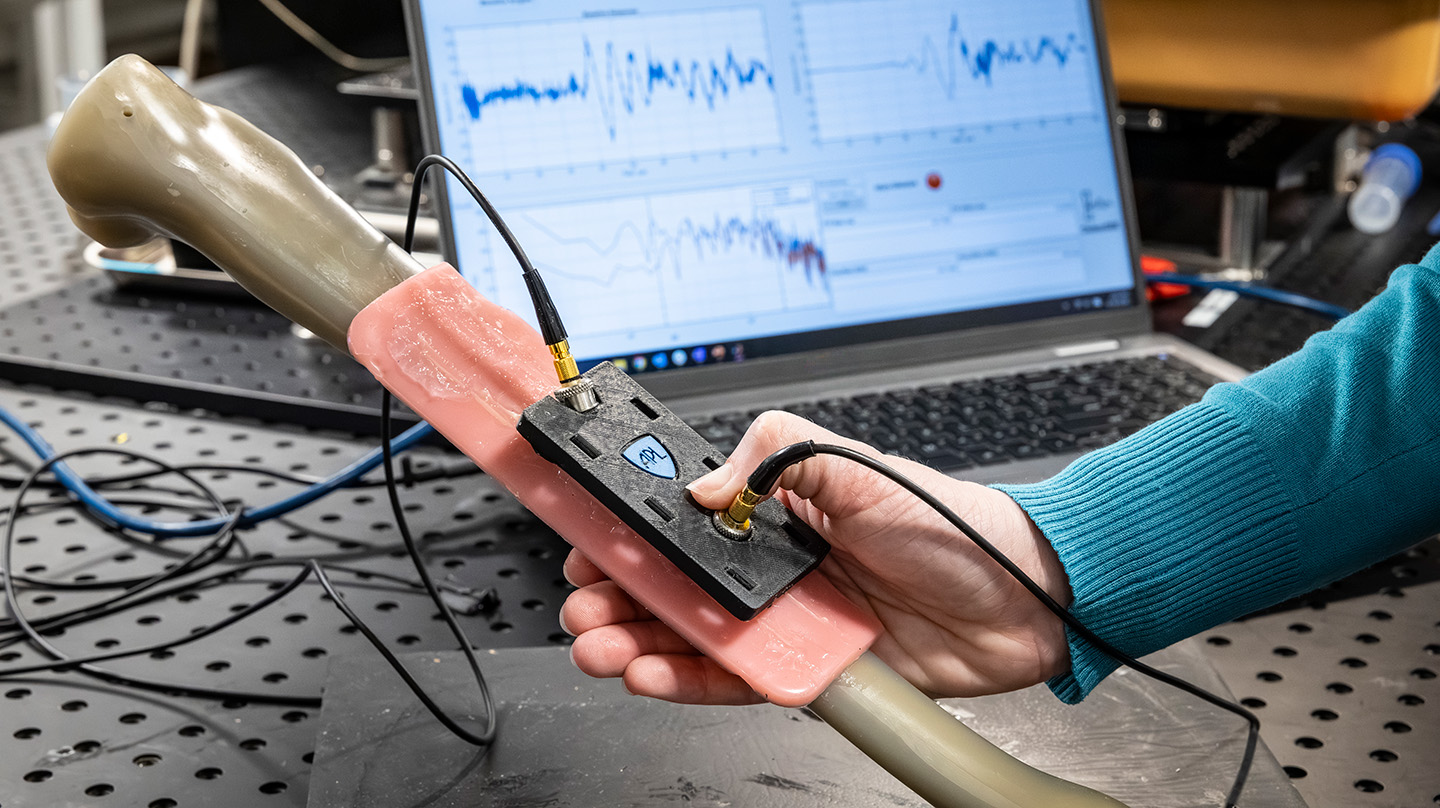
Johns Hopkins APL Technology Targets Earlier Stress-Fracture Detection
Johns Hopkins University Applied Physics Laboratory has developed new technology designed to detect stress fractures at an earlier stage than conventional methods.
The story
in brief.
What happened, who it affects, and why it landed on our intelligence desk — in plain English, sixty seconds or less.
Johns Hopkins University Applied Physics Laboratory has developed new technology designed to detect stress fractures at an earlier stage than conventional methods. This advancement aims to improve diagnostic accuracy and patient outcomes by identifying micro-damage before it progresses to full fractures. The innovation represents a significant step forward in medical imaging and biomechanical analysis, offering potential benefits for athletes and patients with bone density issues. By enabling earlier intervention, this technology could reduce recovery times and prevent long-term skeletal complications, marking a notable evolution in clinical diagnostic capabilities.
Indicative index of skill mentions in professional job postings for the field this story moves (2019 = 1)
What this means
for your career.
Every headline redistributes opportunity. Here is who this one rewards — and how to be on the right side of it.
This development signals a shift towards data-driven diagnostics in healthcare, elevating the value of skills in medical data analysis and engineering. You should pay close attention if you work in healthcare technology, biomedical engineering, or clinical research. Professionals who can bridge the gap between technical innovation and clinical application will find themselves in high demand. To stay competitive, consider upskilling in healthcare data analytics to understand how such technologies integrate into existing systems. Additionally, familiarise yourself with regulatory compliance and product lifecycle management to support the adoption of new diagnostic tools. Proactively learning about these emerging technologies will position you as a forward-thinking professional capable of driving efficiency and improving patient care in your organisation.
For this story, the fields that convert it into pay are Healthcare Data Analytics, Engineering, Healthcare Management and Artificial Intelligence — exactly the programmes matched below. The chart shows the indicative salary uplift certified professionals report in each of those fields; every one of them is a click away, from £79, finishing in as few as 20 days.
Indicative ranges from published continuing-education salary studies, by field — each field is a recommended course below
Enrol in these
to benefit.
These programmes position you for exactly this shift — online, self-paced, and finishing with a verifiable certificate you can share the day you pass.
 Best match
Certificate in Healthcare Data Analytics
 Recommended
Certificate in Engineering
 Recommended
Certificate in Healthcare Management
 Recommended
Certificate in Artificial Intelligence
Launch pricing shown against standard certificate value. The fee you see today is the fee you lock in.
This briefing is based on reporting by Johns Hopkins University Applied Physics Laboratory on 22 Oct, 21:07. Read the original coverage →
Read the news. Then outrun it.
Every OnlineUni programme is online, self-paced and from £79 — so a headline today can be your credential this month.