
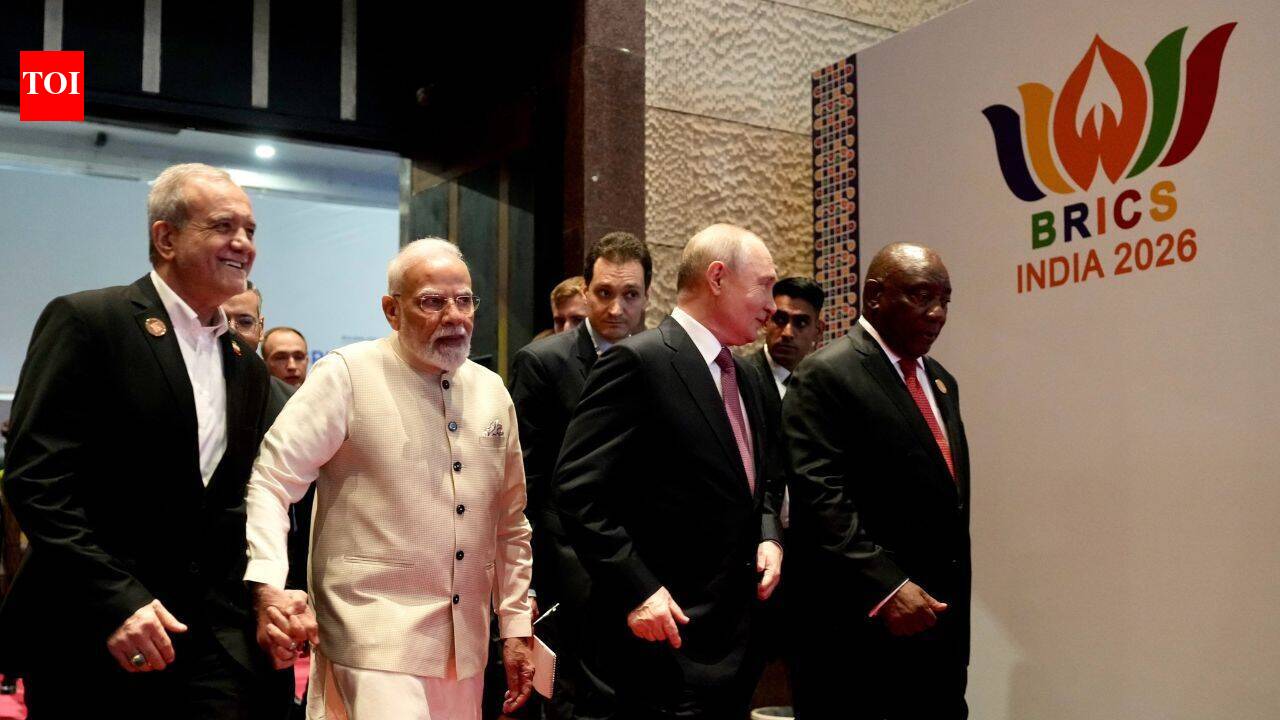
Local currencies, global trade & US sanctions: PM Modi, Putin & Pezeshkian send a message to Trump
Indian Prime Minister Narendra Modi, Russian President Vladimir Putin, and Iranian President Masoud Pezeshkian have collectively signalled a strategic shift towards using local currencies for bilateral trade.
The story
in brief.
What happened, who it affects, and why it landed on our intelligence desk — in plain English, sixty seconds or less.
Indian Prime Minister Narendra Modi, Russian President Vladimir Putin, and Iranian President Masoud Pezeshkian have collectively signalled a strategic shift towards using local currencies for bilateral trade. This move aims to reduce reliance on the US dollar and mitigate the impact of American sanctions. By bypassing traditional Western financial infrastructure, these nations seek to strengthen economic sovereignty and foster deeper regional cooperation. The development highlights a growing trend of de-dollarisation in global commerce, challenging established trade norms. For professionals, this signals a potential restructuring of international payment systems and supply chains, requiring adaptability to new regulatory and financial frameworks in an increasingly multipolar economic landscape.
Indicative index of skill mentions in professional job postings for the field this story moves (2019 = 1)
What this means
for your career.
Every headline redistributes opportunity. Here is who this one rewards — and how to be on the right side of it.
You must now anticipate a fragmented global financial architecture. Professionals in finance, trade compliance, and international law face immediate pressure to master alternative payment mechanisms and sanction evasion risks. Your value rises if you understand cross-border settlement outside SWIFT. Focus on building expertise in regulatory navigation and geopolitical risk assessment. Smart professionals will upskill in currency hedging and non-Western trade finance protocols. Monitor emerging bilateral trade agreements closely. If you work in supply chain or export management, diversify your vendor base away from sanction-sensitive zones. Develop contingency plans for payment disruptions. This shift demands agility; those who ignore it risk obsolescence as traditional dollar-centric models lose dominance. Prioritise learning about local currency settlements and international compliance frameworks to stay ahead in this evolving market.
For this story, the fields that convert it into pay are Finance and Accounting, Risk Management Strategies, Compliance And Governance and Supply Chain — exactly the programmes matched below. The chart shows the indicative salary uplift certified professionals report in each of those fields; every one of them is a click away, from £79, finishing in as few as 20 days.
Indicative ranges from published continuing-education salary studies, by field — each field is a recommended course below
Enrol in these
to benefit.
These programmes position you for exactly this shift — online, self-paced, and finishing with a verifiable certificate you can share the day you pass.
 Best match
Certificate in Finance and Accounting
 Recommended
Certificate in Risk Management Strategies
 Recommended
Certificate in Compliance And Governance
 Recommended
Certificate in Supply Chain
Launch pricing shown against standard certificate value. The fee you see today is the fee you lock in.
This briefing is based on reporting by The Times of India on 11 Sep, 13:26. Read the original coverage →
Read the news. Then outrun it.
Every OnlineUni programme is online, self-paced and from £79 — so a headline today can be your credential this month.