
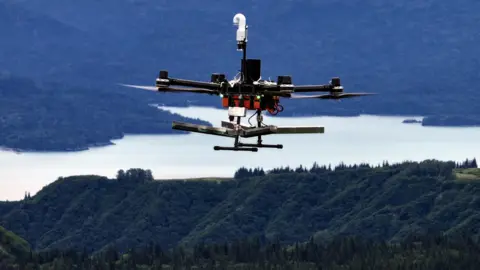
Rainmakers: Will drones make cloud seeding more effective?
Recent reports examine whether drone technology can enhance the precision and efficacy of cloud seeding operations.
The story
in brief.
What happened, who it affects, and why it landed on our intelligence desk — in plain English, sixty seconds or less.
Recent reports examine whether drone technology can enhance the precision and efficacy of cloud seeding operations. Traditionally reliant on aircraft or ground-based generators, this weather modification technique is being re-evaluated for potential improvements through unmanned aerial systems. The inquiry focuses on technical feasibility, operational costs, and environmental implications. This development signals a convergence of atmospheric science and advanced robotics, suggesting that future climate intervention strategies may increasingly depend on autonomous technologies to deliver seeding agents more accurately than conventional methods currently allow.
Indicative index of skill mentions in professional job postings for the field this story moves (2019 = 1)
What this means
for your career.
Every headline redistributes opportunity. Here is who this one rewards — and how to be on the right side of it.
This convergence of atmospheric science and robotics demands attention from professionals in engineering, data analytics, and environmental strategy. Your career resilience depends on understanding how autonomous systems intersect with traditional industries. If you work in project management or operations, study how drone integration alters logistical planning and risk assessment. Data scientists should monitor how real-time atmospheric data improves seeding algorithms. Smart professionals will upskill in unmanned systems regulation and environmental impact assessment. Do not ignore this niche; it represents a growing sector where technical expertise meets urgent climate adaptation needs. Begin by reviewing regulatory frameworks for autonomous aerial vehicles and exploring courses in environmental data analysis to position yourself at this emerging intersection.
For this story, the fields that convert it into pay are Data Science, Engineering, Risk Management Strategies and Sustainability management — exactly the programmes matched below. The chart shows the indicative salary uplift certified professionals report in each of those fields; every one of them is a click away, from £79, finishing in as few as 20 days.
Indicative ranges from published continuing-education salary studies, by field — each field is a recommended course below
Enrol in these
to benefit.
These programmes position you for exactly this shift — online, self-paced, and finishing with a verifiable certificate you can share the day you pass.
 Best match
Certificate in Data Science
 Recommended
Certificate in Engineering
Recommended
Certificate in Risk Management Strategies
 Recommended
Certificate in Sustainability management
Launch pricing shown against standard certificate value. The fee you see today is the fee you lock in.
This briefing is based on reporting by BBC on 7 Oct, 07:09. Read the original coverage →
Read the news. Then outrun it.
Every OnlineUni programme is online, self-paced and from £79 — so a headline today can be your credential this month.