
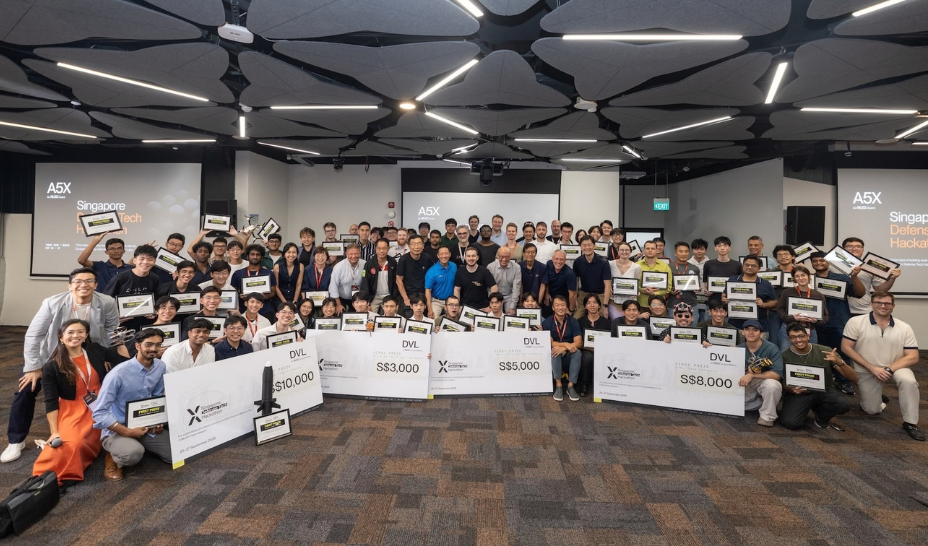
Singapore Defense Tech Hackathon names winners, with promising teams set for venture incubation (Sponsored)
Singapore has concluded its Defence Technology Hackathon, announcing the winning teams from the competitive event.
The story
in brief.
What happened, who it affects, and why it landed on our intelligence desk — in plain English, sixty seconds or less.
Singapore has concluded its Defence Technology Hackathon, announcing the winning teams from the competitive event. Notably, several promising groups have been selected to enter a venture incubation programme. This initiative aims to accelerate the development of their innovative solutions within the defence sector. The hackathon highlights the growing intersection of technology and national security in the region. It signals a strategic push to foster local talent and entrepreneurship in defence capabilities. The selected teams will now receive structured support to refine their prototypes and business models. This development underscores the increasing importance of agile innovation in modern defence strategies, moving beyond traditional procurement methods to embrace startup agility and technological disruption.
Indicative index of skill mentions in professional job postings for the field this story moves (2019 = 1)
What this means
for your career.
Every headline redistributes opportunity. Here is who this one rewards — and how to be on the right side of it.
This shift signals that defence technology is no longer solely the domain of established contractors. For you, this means skills in rapid prototyping, secure software development, and strategic innovation are gaining significant value. Professionals in engineering, data science, and project management should pay close attention to the defence tech sector. You should explore how your current expertise applies to security-focused applications. Consider upskilling in cyber security or artificial intelligence to align with these emerging opportunities. Engaging with innovation labs or hackathons can demonstrate your agility to potential employers. By positioning yourself at the intersection of technology and security, you future-proof your career against traditional market fluctuations.
For this story, the fields that convert it into pay are Cyber Security, Artificial Intelligence, Innovation and Engineering — exactly the programmes matched below. The chart shows the indicative salary uplift certified professionals report in each of those fields; every one of them is a click away, from £79, finishing in as few as 20 days.
Indicative ranges from published continuing-education salary studies, by field — each field is a recommended course below
Enrol in these
to benefit.
These programmes position you for exactly this shift — online, self-paced, and finishing with a verifiable certificate you can share the day you pass.
 Best match
Certificate in Cyber Security
 Recommended
Certificate in Artificial Intelligence
Recommended
Certificate in Innovation
 Recommended
Certificate in Engineering
Launch pricing shown against standard certificate value. The fee you see today is the fee you lock in.
This briefing is based on reporting by EU-Startups on 28 Sep, 13:58. Read the original coverage →
Read the news. Then outrun it.
Every OnlineUni programme is online, self-paced and from £79 — so a headline today can be your credential this month.