
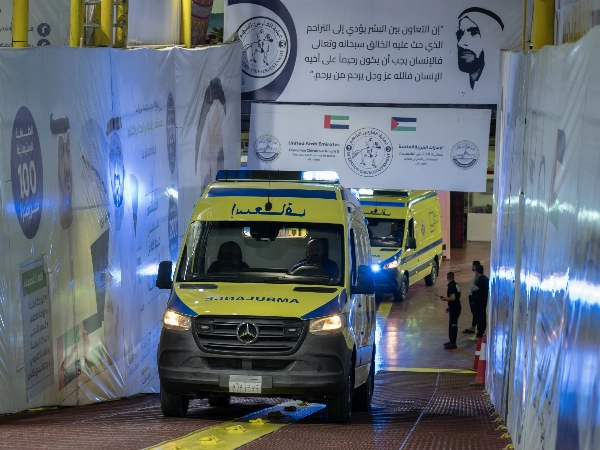
UAE Floating Hospital receives 12 new patients from Gaza under Operation Chivalrous Knight 3
The United Arab Emirates’ floating hospital has admitted twelve new patients arriving from Gaza, marking a significant phase of Operation Chivalrous Knight 3.
The story
in brief.
What happened, who it affects, and why it landed on our intelligence desk — in plain English, sixty seconds or less.
The United Arab Emirates’ floating hospital has admitted twelve new patients arriving from Gaza, marking a significant phase of Operation Chivalrous Knight 3. This humanitarian initiative underscores the ongoing medical crisis in the region and the UAE’s commitment to providing critical healthcare infrastructure where local facilities are overwhelmed. The operation involves complex logistical coordination to transport vulnerable individuals across borders for specialised treatment. For professionals, this highlights the critical intersection of international humanitarian aid, emergency medical response, and cross-border operational management. It serves as a stark reminder of the global demand for robust healthcare systems capable of responding to acute geopolitical conflicts and large-scale displacement events.
Indicative index of skill mentions in professional job postings for the field this story moves (2019 = 1)
What this means
for your career.
Every headline redistributes opportunity. Here is who this one rewards — and how to be on the right side of it.
This development signals rising demand for expertise in crisis response and international healthcare logistics. You should recognise that traditional clinical skills are no longer sufficient; you need mastery in managing high-pressure, resource-constrained environments. Professionals in logistics, supply chain, and healthcare administration must now prioritise adaptability and cross-cultural communication. If you work in project management, focus on agile frameworks for emergency deployments. For those in policy or public administration, understanding international humanitarian law and ethical triage is crucial. Smart professionals will upskill in crisis management and supply chain resilience immediately. Monitor trends in mobile healthcare units and remote diagnostics. Build networks with NGOs and international health organisations. Demonstrating competence in rapid deployment strategies will distinguish you in a market increasingly defined by global instability and the need for immediate, scalable humanitarian solutions.
For this story, the fields that convert it into pay are Healthcare Management, Crisis Management, Supply Chain and Maritime Logistics — exactly the programmes matched below. The chart shows the indicative salary uplift certified professionals report in each of those fields; every one of them is a click away, from £79, finishing in as few as 20 days.
Indicative ranges from published continuing-education salary studies, by field — each field is a recommended course below
Enrol in these
to benefit.
These programmes position you for exactly this shift — online, self-paced, and finishing with a verifiable certificate you can share the day you pass.
 Best match
Certificate in Healthcare Management
 Recommended
Certificate in Crisis Management
 Recommended
Certificate in Supply Chain
 Recommended
Certificate in Maritime Logistics
Launch pricing shown against standard certificate value. The fee you see today is the fee you lock in.
This briefing is based on reporting by GulfToday on 5 Oct, 10:11. Read the original coverage →
Read the news. Then outrun it.
Every OnlineUni programme is online, self-paced and from £79 — so a headline today can be your credential this month.