
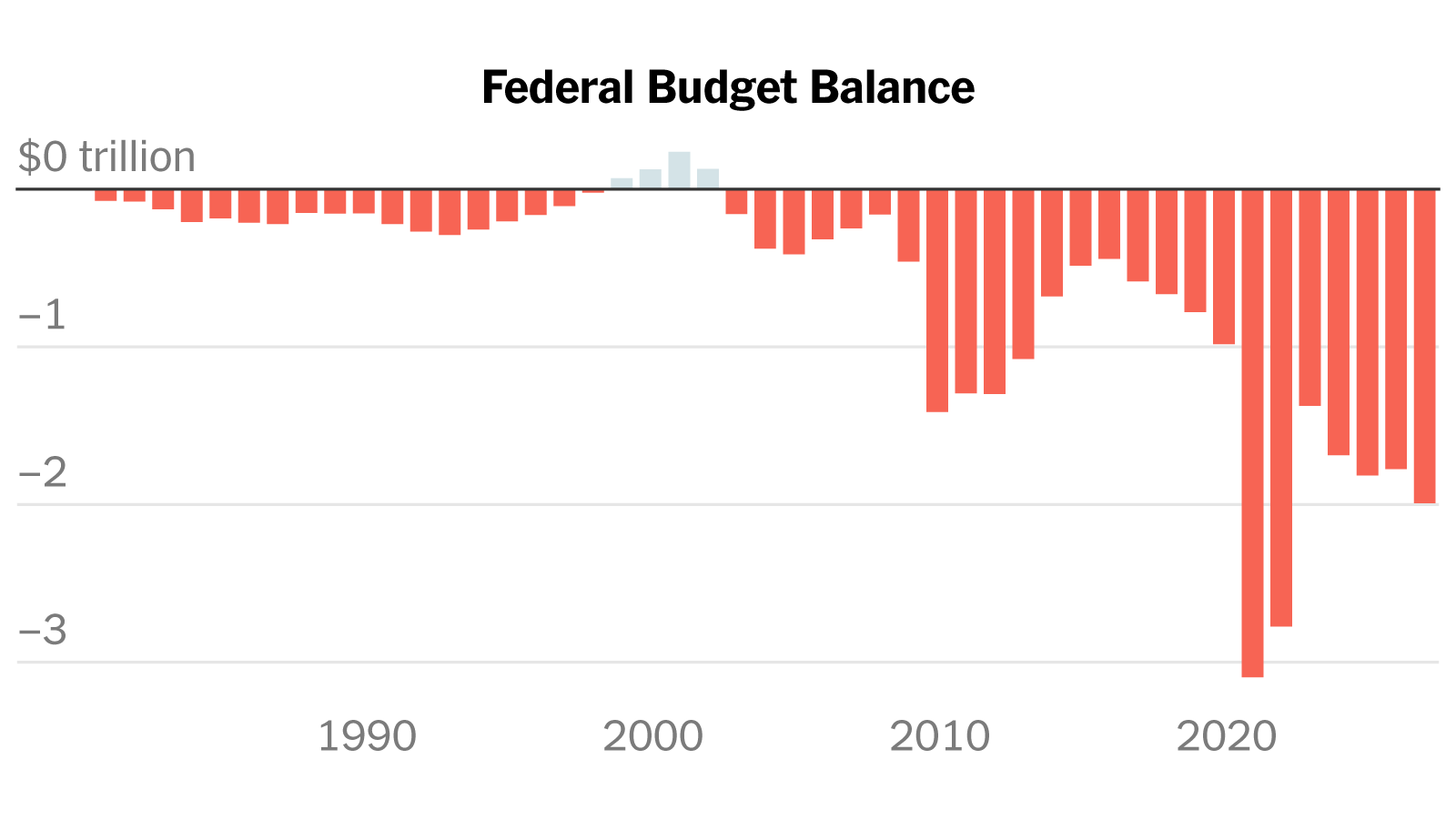
U.S. Budget Deficit Nears $2 Trillion, a Reality Check for Trump’s Cost Cutting
The United States federal budget deficit is approaching the two trillion dollar mark, challenging the narrative of significant fiscal restraint.
The story
in brief.
What happened, who it affects, and why it landed on our intelligence desk — in plain English, sixty seconds or less.
The United States federal budget deficit is approaching the two trillion dollar mark, challenging the narrative of significant fiscal restraint. This development suggests that proposed cost-cutting measures may be insufficient to address the scale of national spending. For professionals, this signals a complex economic environment where government fiscal policy faces substantial headwinds. The report highlights the disconnect between political rhetoric on austerity and the practical realities of maintaining current expenditure levels. Understanding these macroeconomic pressures is crucial for anticipating shifts in public sector contracting, regulatory environments, and broader market confidence. The situation demands a nuanced view of fiscal policy impacts on business operations and career planning.
Indicative index of skill mentions in professional job postings for the field this story moves (2019 = 1)
What this means
for your career.
Every headline redistributes opportunity. Here is who this one rewards — and how to be on the right side of it.
You must navigate an environment where fiscal uncertainty impacts public sector spending and regulatory stability. Professionals in government contracting, finance, and policy analysis should prioritise skills in budgeting and risk assessment. Focus on understanding how macroeconomic shifts influence organisational strategy. Develop expertise in financial modelling to predict cash flow constraints and investment trends. Enhance your ability to communicate complex fiscal data to stakeholders. If you work in the public sector, deepen your knowledge of public administration and compliance. For private sector roles, sharpen your crisis management skills to adapt to volatile economic indicators. Stay informed on legislative changes that may alter industry regulations. Proactively upskill in data analytics to interpret economic trends accurately. Position yourself as a strategic thinker who can guide organisations through fiscal ambiguity. Prioritise adaptability and analytical rigour to remain valuable amidst shifting economic priorities.
For this story, the fields that convert it into pay are Finance and Accounting, Public Administration, Risk Management Strategies and Crisis Management — exactly the programmes matched below. The chart shows the indicative salary uplift certified professionals report in each of those fields; every one of them is a click away, from £79, finishing in as few as 20 days.
Indicative ranges from published continuing-education salary studies, by field — each field is a recommended course below
Enrol in these
to benefit.
These programmes position you for exactly this shift — online, self-paced, and finishing with a verifiable certificate you can share the day you pass.
 Best match
Certificate in Finance and Accounting
 Recommended
Certificate in Public Administration
 Recommended
Certificate in Risk Management Strategies
 Recommended
Certificate in Crisis Management
Launch pricing shown against standard certificate value. The fee you see today is the fee you lock in.
This briefing is based on reporting by The New York Times on 16 Oct, 18:28. Read the original coverage →
Read the news. Then outrun it.
Every OnlineUni programme is online, self-paced and from £79 — so a headline today can be your credential this month.