
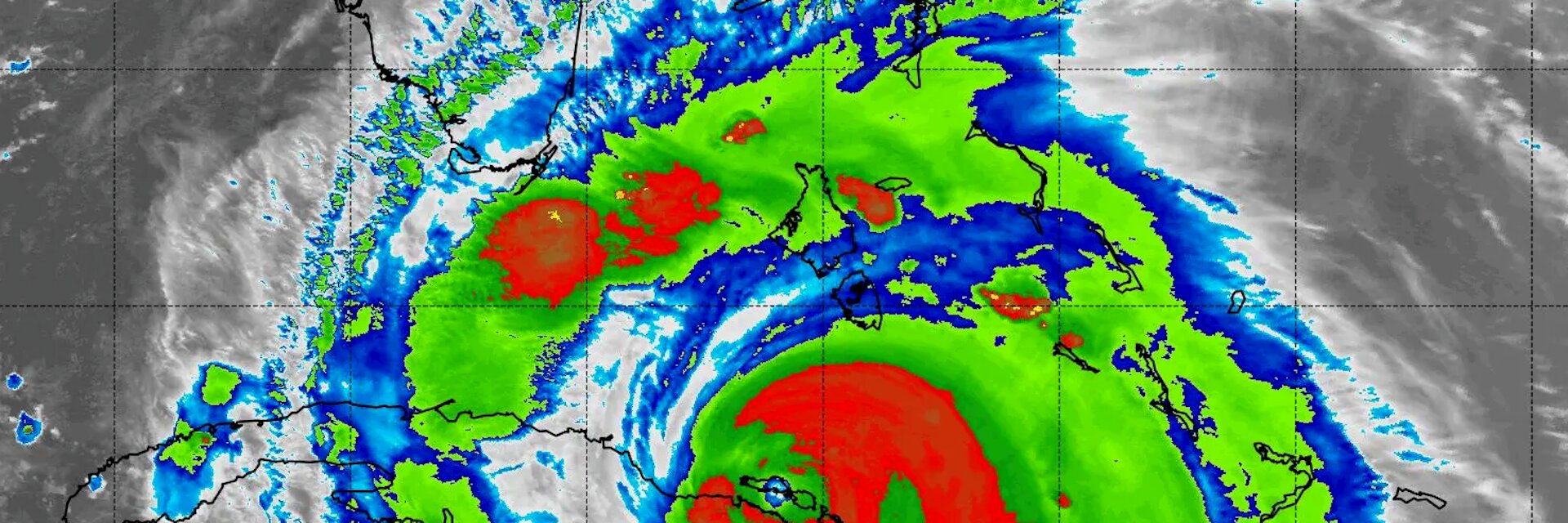
Why AI has trouble predicting the fury of hurricane intensity
Recent research highlights significant limitations in current artificial intelligence models regarding the accurate prediction of hurricane intensity.
The story
in brief.
What happened, who it affects, and why it landed on our intelligence desk — in plain English, sixty seconds or less.
Recent research highlights significant limitations in current artificial intelligence models regarding the accurate prediction of hurricane intensity. While AI excels at tracking storm paths, it struggles to forecast rapid intensification events, which pose severe risks to coastal communities. This discrepancy arises because existing algorithms often fail to fully capture complex atmospheric variables and oceanic interactions that drive sudden strength increases. Consequently, meteorologists and data scientists are urging caution in relying solely on automated predictions for disaster preparedness. The findings underscore a critical gap between computational power and physical understanding in extreme weather modelling, necessitating improved hybrid approaches that combine machine learning with traditional meteorological expertise to enhance forecast reliability and public safety measures.
Indicative index of skill mentions in professional job postings for the field this story moves (2019 = 1)
What this means
for your career.
Every headline redistributes opportunity. Here is who this one rewards — and how to be on the right side of it.
This development signals a growing demand for professionals who bridge the gap between raw data science and domain-specific physical understanding. If you work in risk management, emergency services, or insurance, you must now scrutinise how your organisation relies on AI for weather-related decisions. Pure coding skills are no longer sufficient; you need to understand the limitations of predictive models in complex, non-linear systems. Upskill in interpreting model uncertainty and integrating traditional scientific methods with machine learning. Professionals in engineering and public administration should advocate for hybrid forecasting strategies. Prioritise courses that teach critical evaluation of AI outputs rather than just implementation. This shift values sceptical, interdisciplinary thinkers who can prevent over-reliance on flawed automated predictions, ensuring robust contingency planning and safer operational outcomes in volatile environments.
For this story, the fields that convert it into pay are Data Science, Risk Management Strategies, Crisis Management and Artificial Intelligence — exactly the programmes matched below. The chart shows the indicative salary uplift certified professionals report in each of those fields; every one of them is a click away, from £79, finishing in as few as 20 days.
Indicative ranges from published continuing-education salary studies, by field — each field is a recommended course below
Enrol in these
to benefit.
These programmes position you for exactly this shift — online, self-paced, and finishing with a verifiable certificate you can share the day you pass.
 Best match
Certificate in Data Science
 Recommended
Certificate in Risk Management Strategies
 Recommended
Certificate in Crisis Management
 Recommended
Certificate in Artificial Intelligence
Launch pricing shown against standard certificate value. The fee you see today is the fee you lock in.
This briefing is based on reporting by Phys.org on 27 Sep, 00:30. Read the original coverage →
Read the news. Then outrun it.
Every OnlineUni programme is online, self-paced and from £79 — so a headline today can be your credential this month.