
Why shares are the new bricks and mortar
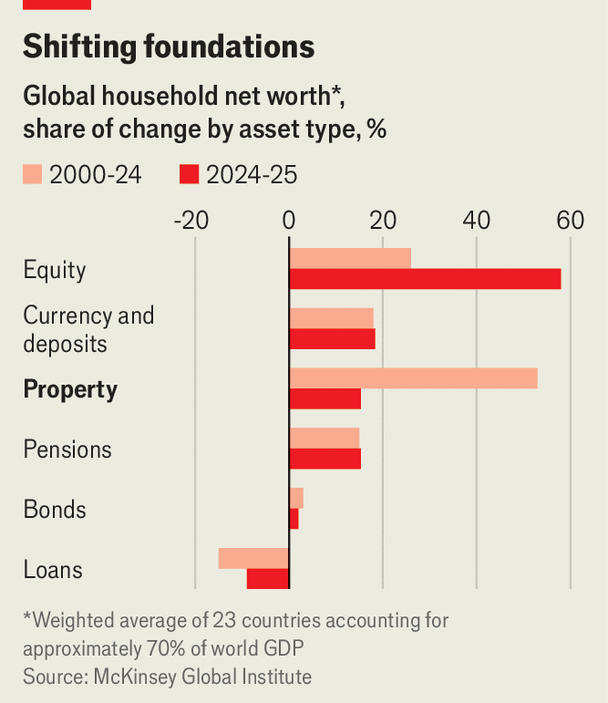
The Economist reports that equities are increasingly displacing property as the primary store of wealth for investors.
The story
in brief.
What happened, who it affects, and why it landed on our intelligence desk — in plain English, sixty seconds or less.
The Economist reports that equities are increasingly displacing property as the primary store of wealth for investors. This structural shift reflects changing market dynamics where stock markets offer superior liquidity and returns compared to traditional real estate assets. The trend challenges long-held beliefs about property as the safest investment vehicle, suggesting a broader rebalancing of portfolios towards financial instruments. Professionals must recognise this evolving landscape, where capital allocation strategies prioritise shareholding over physical asset accumulation, signalling a significant transformation in personal and institutional finance.
Indicative index of skill mentions in professional job postings for the field this story moves (2019 = 1)
What this means
for your career.
Every headline redistributes opportunity. Here is who this one rewards — and how to be on the right side of it.
You must adapt your financial literacy to remain relevant in a market where equities dominate wealth creation. Understanding valuation metrics, portfolio diversification, and market volatility is no longer optional for senior leaders. You should prioritise learning how to analyse investment risks and communicate financial strategy to stakeholders who are shifting capital away from property. If you work in corporate finance or advisory, deepen your expertise in equity markets. A smart professional would immediately upskill in financial modelling and risk assessment to advise clients or boards effectively. Ignoring this trend leaves you ill-equipped to guide organisations through modern capital allocation decisions, potentially stalling your career progression in finance and strategic management roles.
For this story, the fields that convert it into pay are Finance and Accounting, Financial Modeling, Risk Management Strategies and Business And Management — exactly the programmes matched below. The chart shows the indicative salary uplift certified professionals report in each of those fields; every one of them is a click away, from £79, finishing in as few as 20 days.
Indicative ranges from published continuing-education salary studies, by field — each field is a recommended course below
Enrol in these
to benefit.
These programmes position you for exactly this shift — online, self-paced, and finishing with a verifiable certificate you can share the day you pass.
 Best match
Certificate in Finance and Accounting
 Recommended
Certificate in Financial Modeling
 Recommended
Certificate in Risk Management Strategies
Recommended
Certificate in Business And Management
Launch pricing shown against standard certificate value. The fee you see today is the fee you lock in.
This briefing is based on reporting by The Economist on 7 Oct, 18:47. Read the original coverage →
Read the news. Then outrun it.
Every OnlineUni programme is online, self-paced and from £79 — so a headline today can be your credential this month.