
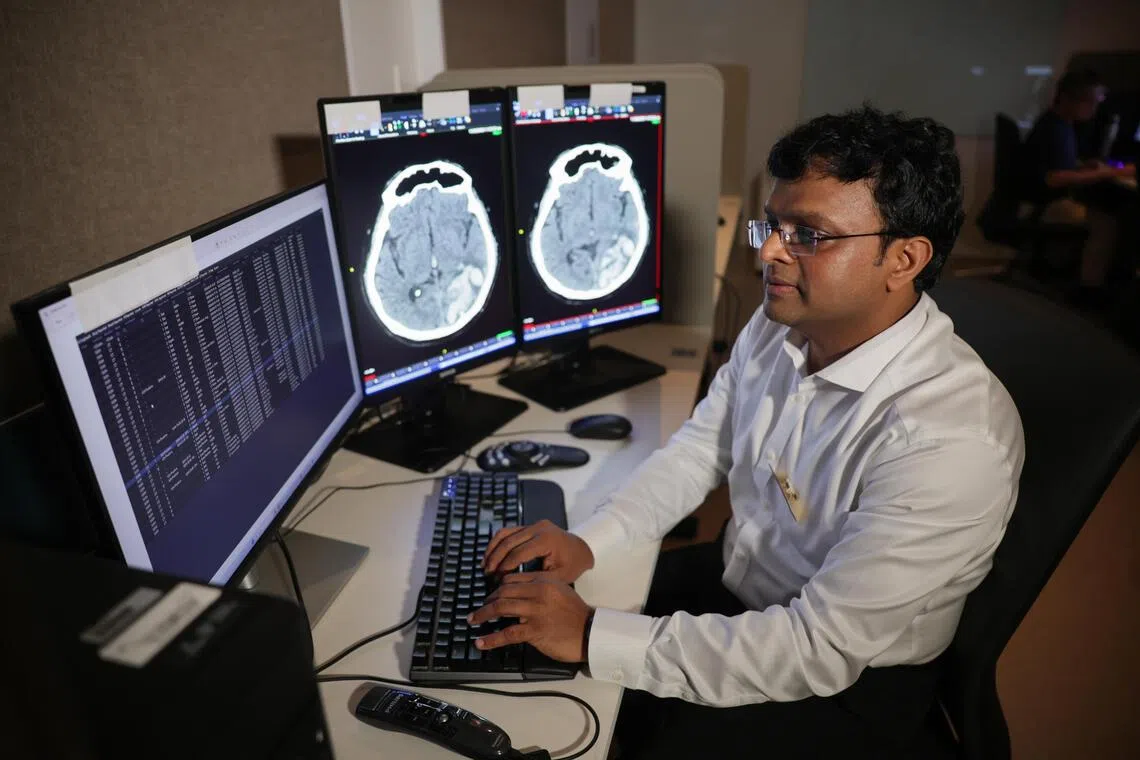
With new AI tool, SGH can detect brain bleeding from CT scans in a few minutes
Singapore General Hospital has deployed a new artificial intelligence tool capable of detecting brain bleeding from CT scans within minutes.
The story
in brief.
What happened, who it affects, and why it landed on our intelligence desk — in plain English, sixty seconds or less.
Singapore General Hospital has deployed a new artificial intelligence tool capable of detecting brain bleeding from CT scans within minutes. This technology significantly accelerates diagnostic processes compared to traditional methods, which often require lengthy radiologist reviews. The system aims to reduce wait times for critical stroke patients, enabling faster medical intervention and potentially improving survival rates. This development highlights the growing integration of advanced machine learning algorithms into routine clinical workflows, marking a significant step forward in digital health infrastructure and emergency medical response capabilities in Singapore.
Indicative index of skill mentions in professional job postings for the field this story moves (2019 = 1)
What this means
for your career.
Every headline redistributes opportunity. Here is who this one rewards — and how to be on the right side of it.
This shift demands that you adapt to AI-augmented clinical workflows. For radiologists and clinicians, the value of pure manual interpretation declines, while skills in validating AI outputs and integrating them into patient care rise sharply. You must understand the technical limitations and ethical implications of these tools. Smart professionals should upskill in data literacy and clinical informatics to bridge the gap between technology and medicine. If you manage healthcare operations, focus on implementing these systems effectively. Prioritise courses that teach you how to leverage AI for better decision-making rather than viewing it as a replacement. Staying ahead means mastering the human-machine collaboration essential in modern, high-stakes medical environments.
For this story, the fields that convert it into pay are Artificial Intelligence, Healthcare Management, Data Science and Healthcare Data Analytics — exactly the programmes matched below. The chart shows the indicative salary uplift certified professionals report in each of those fields; every one of them is a click away, from £79, finishing in as few as 20 days.
Indicative ranges from published continuing-education salary studies, by field — each field is a recommended course below
Enrol in these
to benefit.
These programmes position you for exactly this shift — online, self-paced, and finishing with a verifiable certificate you can share the day you pass.
 Best match
Certificate in Artificial Intelligence
 Recommended
Certificate in Healthcare Management
 Recommended
Certificate in Data Science
 Recommended
Certificate in Healthcare Data Analytics
Launch pricing shown against standard certificate value. The fee you see today is the fee you lock in.
This briefing is based on reporting by The Straits Times on 21 Sep, 13:10. Read the original coverage →
Read the news. Then outrun it.
Every OnlineUni programme is online, self-paced and from £79 — so a headline today can be your credential this month.