
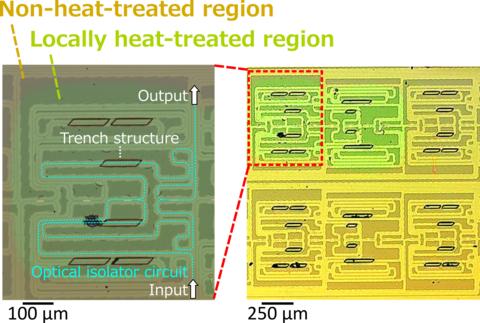
World’s First: Kyocera and Tohoku University Develop Technology to Integrate Optical Isolators Directly onto Silicon Photonics Chips*1
Kyocera and Tohoku University have successfully integrated optical isolators directly onto silicon photonics chips, marking a significant breakthrough in optical communication technology.
The story
in brief.
What happened, who it affects, and why it landed on our intelligence desk — in plain English, sixty seconds or less.
Kyocera and Tohoku University have successfully integrated optical isolators directly onto silicon photonics chips, marking a significant breakthrough in optical communication technology. This development addresses a longstanding challenge in miniaturising photonic circuits by eliminating the need for bulky external components. The achievement enables more compact, efficient, and cost-effective optical systems, potentially accelerating the adoption of silicon photonics in data centres and telecommunications infrastructure. This integration simplifies manufacturing processes and enhances signal integrity within integrated photonic platforms.
Indicative index of skill mentions in professional job postings for the field this story moves (2019 = 1)
What this means
for your career.
Every headline redistributes opportunity. Here is who this one rewards — and how to be on the right side of it.
This breakthrough signals a shift towards highly integrated photonic systems, elevating the value of specialists in optical engineering and semiconductor manufacturing. If you work in hardware development or telecommunications, you must now understand how integrated optics impact system design and efficiency. Professionals in R&D should prioritise skills in photonics integration and material science. For engineers, mastering the interface between silicon electronics and optical components is no longer optional; it is essential. You should review current literature on silicon photonics to identify gaps in your technical knowledge. Consider upskilling in advanced manufacturing techniques or optical system design to remain competitive. Those in project management within tech sectors must also grasp these developments to better assess timelines and resource needs for next-generation communication infrastructure projects.
For this story, the fields that convert it into pay are Engineering, Innovation, Requirements Engineering and Risk Management Strategies — exactly the programmes matched below. The chart shows the indicative salary uplift certified professionals report in each of those fields; every one of them is a click away, from £79, finishing in as few as 20 days.
Indicative ranges from published continuing-education salary studies, by field — each field is a recommended course below
Enrol in these
to benefit.
These programmes position you for exactly this shift — online, self-paced, and finishing with a verifiable certificate you can share the day you pass.
 Best match
Certificate in Engineering
 Recommended
Certificate in Innovation
 Recommended
Certificate in Requirements Engineering
Recommended
Certificate in Risk Management Strategies
Launch pricing shown against standard certificate value. The fee you see today is the fee you lock in.
This briefing is based on reporting by finance.yahoo.com on 10 Sep, 15:03. Read the original coverage →
Read the news. Then outrun it.
Every OnlineUni programme is online, self-paced and from £79 — so a headline today can be your credential this month.